Once upon a time, in the valley of Meraviglia, there was a town where no one ever dreamed.
It all began when the king, who ruled with a cold and jealous heart, was out for a walk and overheard people sharing what they had seen in their sleep the night before.
The king was a serious man who bore the burden of many responsibilities. He had never dreamed himself, so he found the talk he heard confusing. And the king had long ago concluded, anything that confused him must be dangerous.
“I will not stand for my people wasting their time on fantasy,” he declared. “Today it is innocent talk of make believe, but who knows where this could lead,” he reasoned.
The king summoned his wizard and ordered him to cast a spell preventing all those who lived within the town’s walls from dreaming. When the wizard reported that the spell had been cast, the king directed his heralds to march to the central piazza and read a proclamation declaring dreams and all talk of them a frivolous waste of time that contributed to the decay of the community, and therefore a spell had been cast making it impossible to dream and that all talk of dreams was henceforth forbidden.
From that day on, when the king walked the streets of town, he did not hear any talk of dreams. His spies and agents and soldiers regularly reported that his subjects loyally obeyed his order.
In time, a prince was born. The king was determined to keep all folly and wonder away from the boy. After all, as a prince, he needed to prepare for the serious work of being king one day.
The young prince tried to obey his father’s orders, but he could not resist what his imagination made possible. He found ways to fill his days with wonder and learned to never share his secrets with anyone in the castle.
Only given toy soldiers to play with, the prince built a kingdom of teacups lived in by thimbles and spoons.
When the prince was discovered turning a seamstress’s discarded scraps of fabric into puppets – animals that talked and danced – the prince was moved to a tower room far from the rest of the palace where guards had strict control over all who passed.
During lessons and lectures, he filled pages with drawings and stories. The imaginary lands he drew contained no fortress walls or castles towering over the villagers.
Every night, after turning out his light, the prince fed sheet after sheet of paper to the fire in his room. In the morning, he swept up what remained and, standing at his window, released the ashes of the impossible things he had drawn into the wind.
“You cannot waste your time on make believe and fantasy,” the king told the prince. “I am preparing you to be king and for that you must see the world for what it is and not waste time on wild fantasies of what can never be.”
* * *
In time, the young prince learned how to disguise himself and sneak away from the castle – escaping the constant watch of guards who reported everything he did to his father the king.
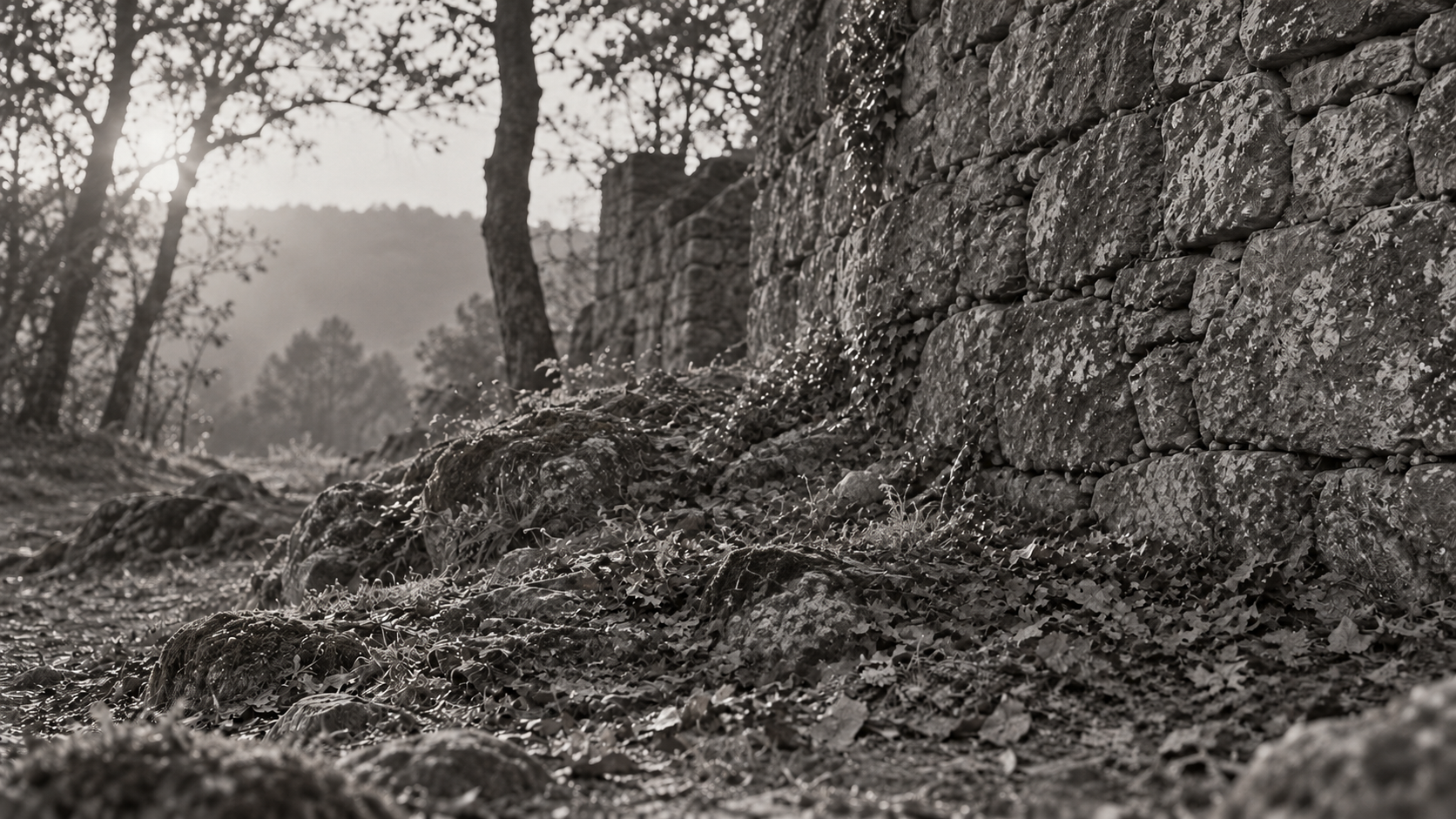
One day, while walking beside the stone wall surrounding the town, the prince heard voices on the other side.
The stories they were sharing were like nothing he had heard before. What they described had been seen in their sleep – houses floating on clouds, mountains that grew and changed shape, flowers that spoke. Their stories ignored all logic of space or time.
The prince felt light-headed. His heart raced. He breathed in deeply to quell his rising dizziness.
He needed to hear more.
The prince ran along the wall until he came to an opening to a path through the woods on the other side of the stone wall.
Stepping off the path, he found a clearing where a group of boys sat cross-legged beside a circle of makeshift tents.
One boy, older and taller than the others, sat atop a rock. His green eyes sparkled in the golden sunlight slipping through the leaves. With nothing but a nod of his head, this boy let each speaker know when it was his turn to talk.
At every new story, the boy atop the boulder smiled. The prince, crouching low, lost his balance and fell to his knees. At the sound of snapping twigs, the boys sprang to their feet.
The boy on the rock, spotting the prince, signaled for the others sit down.
“Come join us and listen,” he said. “You don’t need to hide yourself.”
“Who are you? Where did you come from?” asked one of the boys.
“I live in the town. I was walking beside the wall, and I heard your stories,” said the prince.
One the boys spoke up. “He will report us to the king. We must –”
“You wouldn’t do that, would you?” the older boy asked the prince.
“Never. I want to hear your stories,” said the prince. “I don’t understand how you see things when you are asleep.”
“That’s like asking how the sun shines, how a flower blooms, a bird flies.”
“I would like to dream,” said the prince. “Do you think I could learn how to dream?”
“Meet us here tomorrow –”
“No.” One of the boys leapt up and interrupted.
“…and we will teach you,” finished the older boy.
“He could be a spy,” warned the other boy.
“If he were a spy, he’d have run back to report us already,” said the older boy.
“I don’t trust him. This is too dangerous.”
“Three days,” said the older boy. “We will teach him to dream, and after three nights and three mornings we will be on our way.”
The prince thanked the older boy and promised to return the next day.
The older boy walked the prince back to the path.
“You might want to put on simpler boots tomorrow. Maybe tomorrow one of the others will notice,” said the older boy.
Lying in bed that night, the prince trembled at the thought sleep could hold something other than empty darkness. The moment when the other boy shouted out “No” returned again and again, each time he felt the fear of losing something just discovered. The memory disappeared in the warm of the older boy’s smile.
Just as the first hint of daylight appeared in the sky, after a restless, anxious night, the prince fell asleep.
* * *
The prince dragged himself through the next day, gazing out the window at the wall where everything had changed the day before. He took a nap when his tutor was not looking. Each toll of the bell in the palace clock tower brought the prince closer to the moment he could escape and to learn to dream.
At last, his tutor said the words he had been waiting to hear all day: “We are done.” He seemed as relieved as the prince. “I hope whatever is distracting you today is forgotten by tomorrow.”
The prince knew that was impossible.
“I’m just very tired. I could not sleep last night.”
The prince donned his disguise, which now included a pair of old boots he’d taken from the servants’ quarters and snuck out. As he made his way through town to the stone wall, he noticed a greater presence of soldiers on the streets.
On the other side of the stone wall, the older boy was waiting, hidden behind a tree.
When they were gathered in a circle, the boy who had objected to the invitation from the day before was told to share his dreams. They went around the circle one by one, ending with the older boy whose dream, the prince thought, was the most fantastic of all.
“Every night of my life I have slept and never seen anything,” said the prince. “When I think of what I have been missing…”
“You have more nights ahead of you than behind you,” said one of the boys.
“Now you know what is possible…” said the older boy.
When the sun sank behind the stone wall, one of the boys started a small fire to fight off the chill in the air, early evening shadows fell on the ground around them.
“I need to go,” said the prince, prompted by the sound of mounted soldiers beginning their nightly patrols.
“Two more days. That’s it,” warned the boy who remained as skeptical and wary as the day before.
Safely back in his room, the prince tucked his disguise in the back of his wardrobe, and went to make a show of reading history in front of the fire in the Long Hall.
Shortly before his father’s arrival, the head of the king’s spies appeared in the doorway.
“Here you are,” he said to the prince. “I was afraid I was going to have some explaining to do to your father.”
Before the prince could reply, the king entered and declared it was time for dinner. “You can bring your book. I am told there are urgent matters I must discuss,” said the king, nodding to his spy chief.
During dinner, the king and the head of his spies talked in hushed tones. The prince tried to concentrate on his book.
When he was done, the prince excused himself and returned to his room.
That night, lying in bed, he made wishes on each of the stars framed by his window until, filled with hope and expectation, he fell asleep.
When the morning light streamed through the window, the prince woke up to the reality he had experienced no dreams.
“It was silly to think I could dream after only one day. I still have two more nights,” he said.
* * *
That day, the prince’s studies once again dragged, but he was more attentive, hoping to not arouse his tutor’s suspicion.
When the prince returned to his room after his session with his tutor, he recognized the laborer repairing a patch of wall in the corridor as one of the royal spies. When the spy took a mid-afternoon break, the prince put on his disguise and snuck out.
Just like the day before, the boy was waiting just off the path on the other side of the stone wall.
When they were gathered in a circle, prince confessed, “I saw nothing last night.”
“I told you,” said the boy who remained skeptical. “This is nothing but a dangerous waste of time.”
“Give yourself the grace of patience,” said the older boy to the prince.
As the boys around the circle shared their dreams, the prince memorized each one.
The prince reasoned: “If I can’t have my own dreams, I will experience theirs.”
When the light of sunset filtered through the leaves, the prince bid farewell.
“Sleep well,” said the older boy. “Sweet dreams.”
That night, the prince turned his back on the stars that had failed him the night before and concentrated on all the stories he had memorized. Around midnight, weary and dizzy, he fell asleep.
By morning, the prince was once again facing the window. He blinked awake to the bright morning sun and confronted the reality he experienced another night with no dreams.
Two nights done. Only one remained.
Before he left, he turned his pillow over to hide the tear stains.
* * *
The first two days, time moved slowly. On this, the final day, the day sped by and the prince was almost surprised when it was time to sneak away to his rendezvous beside the stone wall.
As the prince put on his disguise, troops drilled in the courtyard below. Soldiers patrolled the streets of town in pairs. In the market square, spies and agents of the king out-numbered farmers and merchants.
The prince shuddered at the risk the boys were taking by staying near town.
When the prince arrived, the hostile boy said, “Look at him. He didn’t dream. He’ll never dream.”
The oldest boy rested his hand on the ground. The prince sat beside him.
That day, while the boys shared stories, the ground shook beneath them as mounted soldiers charged by.
When everyone had shared their dreams from the night boy, the older boy walked the prince back to the entrance in the wall.
“I’m afraid,” said the prince. “What if tonight there is nothing? And after tomorrow, you’ll be gone.”
“What you’ve heard here will always be with you,” said the boy.
The prince’s return to the palace took longer than usual. He had never seen so many soldiers marching through the streets. Guards stood on every corner. At the palace, soldiers patrolled every hallway. After dinner, the prince was escorted to his room by two armed guards who would remain outside his door all night.
Outside the stone wall, sensing the rising danger, the boys did not light a fire that night.
“We need to leave. I told you we would be in danger and now we are,” said the boy who had not wanted to help the prince.
“We made a promise,” said the older boy.
“We?”
“Leave if you want. I am staying. I have a promise to keep: One more night. One more morning.”
He bid the others goodbye and made plans to meet them the following day.
From his room in the palace, the prince watched the soldiers in the courtyard – saddling their horses, sharpening their swords, loading their quivers with arrows.
“I must warn them,” thought the prince. He put on his disguise and snuck out of the palace.
The streets of Meraviglia were empty of townspeople. All the taverns and shops were closed. Light slipped through the cracks in the shutters over every window. The prince slipped along the dark edges of the streets.
The silence was broken by the thunder of a hundred hooves. Sparks flew as the steel of the horse’s shoes crashed against the cobblestones. The prince’s cape flapped in the breeze whipped up when the mounted soldiers charged past.
In the clearing beside the stone wall, the camp the boys had built was gone – everything had been trampled by horses, destroyed by soldiers.
The prince collapsed against the stone wall. As he stared into the dark, the older boy stepped out from hiding and sat beside him.
“You’re safe,” exclaimed the prince, wiping his cheek.
“The others left long ago. When they came, I hid in the trees above. They never looked up,” he said with a laugh.
“But it’s not safe for you here,” said the prince.
“I promised you three nights. Three mornings,” answered the boy.
“I have wished on the stars – nothing. I memorized the stories you all shared, hoping those would become mine. Nothing,” confessed the prince. “I can’t dream no matter what I do.”
“The answer isn’t in the stars or in the dreams of others,” said the boy.
The prince rested his on the shoulder of the boy and fell asleep against the stone wall.
The next morning, when the sun rose, the prince knew this morning was different from all others.
“And now, my sweet prince,” said the boy, “tell me about your dreams.”