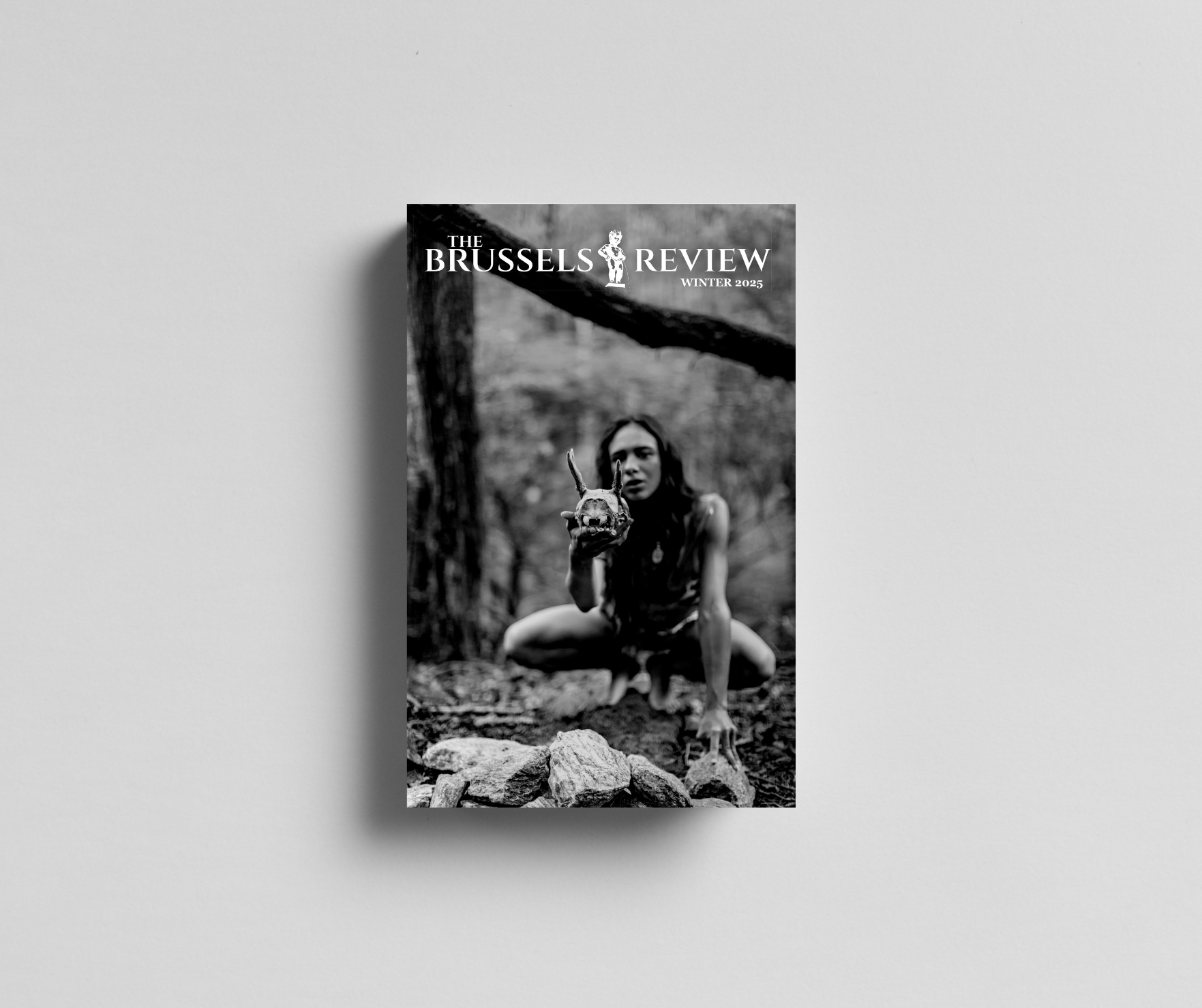
In this episode of Call to the Editor, fiction editor Femke Van Son speaks with writer Lia Tjokro about her short story The Caretaker of Tears, featured in the upcoming Winter 2025 issue of The Brussels Review. Tjokro discusses her journey from cognitive neuroscience to literary fiction, and the personal experiences of grief and emotional expression that shaped the story. Together, they explore the cultural stigma around tears, the psychological and neurological value of crying, and how fantasy can be used to reframe vulnerability as purpose and care. The conversation also touches on Tjokro’s writing process, her literary influences, and her upcoming projects in both English and Indonesian.
Femke Van Son: Hello and welcome to this episode of Call to the Editor. My name is Femke Van Son. I am a fiction editor with The Brussels Review, and I’m here today with Lia Tjokro to talk about her story The Caretaker of Tears, which is featured in our upcoming Winter 2025 issue of The Brussels Review. You can get the Winter issue at shop.thebrusselsreview.com; use the code CALLTOTHEEDITOR to receive 25% off until the end of January. I would also like to thank our sponsor, the ACC; the Art and Creativity Consortium, the organization that supports the publication of The Brussels Review and its wider cultural initiatives across Europe. If you’re a creator, writer, small publisher, printer, or organization dedicated to supporting art and literature, we invite you to connect with us and become part of a living cultural network. Thank you so much for joining me, Lia.
Lia Tjokro: Thank you for having me.
Femke Van Son: Can you briefly introduce yourself; tell me where you’re based and what occupies you on most days?
Lia Tjokro: I’ve done many different things. By graduate training, I’m actually a cognitive neuroscientist. I did my PhD in cognitive neuroscience and cognitive psychology. After that, I moved to the Netherlands and stopped working in academia. At that point, I decided I wanted to write. I started writing seriously and sending my work to literary journals within the past year or so. It’s been a huge learning experience. Right now, what keeps me busy is writing, editing, and figuring out what I want to write next. It’s very different from academia, but for me, writing has always been a childhood dream. It feels like the right time to pursue it.
Femke Van Son: That’s wonderful to hear. How much writing experience do you have; how long have you been writing?
Lia Tjokro: I’ve loved writing since I was a little girl. My mother passed away when I was four, and there was a lot of chaos in my head at that time. Writing helped calm me down. I continued writing for years, then stopped for a while because of school, graduate school, marriage, and having children. Over the past few years, I rediscovered writing. I also learned a lot from reading. Fantasy romance, thrillers, and coming-of-age stories are genres that really draw me in, and those influences appear in my writing now.
Femke Van Son: Let’s talk about The Caretaker of Tears. Tears are often seen as something to hide or discard. Your story imagines a world where they are precious. How did you come up with this idea?
Lia Tjokro: Part of it comes from psychology and my own experience. There’s a misconception that crying is weakness or something embarrassing. But psychological research increasingly shows that crying can help mental health. Personally, I grieved my mother’s death for many years without realizing it. I hid my tears. Only later did I begin to allow myself to cry and realize how helpful it was. The idea for the story came from that realization; that crying is not bad, that grief is normal, and that tears are part of loving someone deeply. That became the foundation of The Caretaker of Tears.
Femke Van Son: Is there a particular moment in the story that captures its essence for you?
Lia Tjokro: Yes; the scene of crying at the bus stop. I’ve done that myself. Sitting alone, not wanting people to see me cry. The other important element is the quiet, isolated house in nature where the caretaker and the angel are alone. That reflects my own wish at that time to have a private space to grieve without social pressure.
Femke Van Son: That sense of being alone in public is very relatable.
Lia Tjokro: Exactly. You want privacy, but you’re surrounded by people. The story creates a fantastical space where that privacy exists.
Femke Van Son: Did writing this story change your relationship to your own experiences of grief?
Lia Tjokro: Yes. Writing has always helped me understand myself. I didn’t recognize my grief until recently. Writing allowed me to put feelings into words that I couldn’t express otherwise. It helped me see grief as something manageable; something that can be processed with time and support from family.
Femke Van Son: The angels in the story can also be read as a source of hope.
Lia Tjokro: Yes. On the surface, the story may seem bleak, but there is purpose in grief. It doesn’t last forever. The tears help the angel, and in doing so, they help the caretaker move forward as well.
Femke Van Son: So nothing is wasted.
Lia Tjokro: Exactly. Even neurologically, crying helps the brain release emotion. That perspective is important to me as a former neuroscientist.
Femke Van Son: What is your writing process like? Do you plan carefully or write freely?
Lia Tjokro: I’m somewhere in between. I usually outline key points before writing, but within those points, I allow flexibility. I need structure, but also room for creativity.
Femke Van Son: Do you have a preferred time or place to write?
Lia Tjokro: Usually mornings, in my home office. My son is a teenager now and independent, so I have that time. Sometimes my dog keeps me company.
Femke Van Son: Who are your main literary influences?
Lia Tjokro: Japanese writers, especially for how they make simple moments meaningful. Alice Munro has also influenced me; her work appears simple but carries deep emotional weight. I also admire Toni Morrison and Han Kang. They explore emotion deeply without sentimentality.
Femke Van Son: How do you see your work fitting into today’s literary landscape?
Lia Tjokro: I want to explore emotional themes like tears and grief in a literary way while staying true to my love for fantasy and thriller genres. I hope readers see the larger picture.
Femke Van Son: What do you hope readers take away from The Caretaker of Tears?
Lia Tjokro: First, that they enjoy it. And then, that it’s okay to be sad, to cry, and to be human.
Femke Van Son: What’s next for you?
Lia Tjokro: I have a novel under review with a major Indonesian publisher, as well as several short stories in English and Indonesian currently under consideration.
Femke Van Son: Where can readers find more of your work?
Lia Tjokro: On my Instagram; there’s a link to a Google document with my publications. I currently have around nine or ten published pieces.
Femke Van Son: Any final thoughts?
Lia Tjokro: Thank you to everyone who reads my work. I struggled with self-doubt for years, but taking the first step changed everything. If you have a dream, maybe it’s time to pursue it.
Femke Van Son: Thank you again, Lia. Readers can find The Caretaker of Tears in the upcoming Winter 2025 issue of The Brussels Review. Thank you also to the ACC for supporting our work. Until next time.