On October 10th, 2024, I wrote to myself: “You are built big so you can weather the movement, so you can travel, so you can sustain. You are built big so you can stay moving, both properties intrinsic to you and your life on this planet”. I sat on my yellow dorm-room comforter, moved to tears. I wasn’t crying over my body, I don’t think. I was crying over the whales.
Whales, the largest animals on the planet, increasingly live in waters in which they weren’t raised. They are migratory creatures, yes, but the “periodically and seasonally reproductive ocean” (Giggs, 168) isn’t the cause of this displacement: whales come back time and time again to the same exact longitude and latitude, and they will never be in the same water twice. This isn’t wishy-washy, all-atoms-are-moving-and-exchanging-at-every-moment sentiment, either. This is simply the consequence of human activity on the water. As we put more boats out to sea and more oil in the water and more drills in the deltas, we fundamentally change their entire world. The only reason they can survive that is their immense size, which allows them to keep swimming. They are forced to search for safer waters, new homes, everywhere. I know something about that, and I wish the whales didn’t.
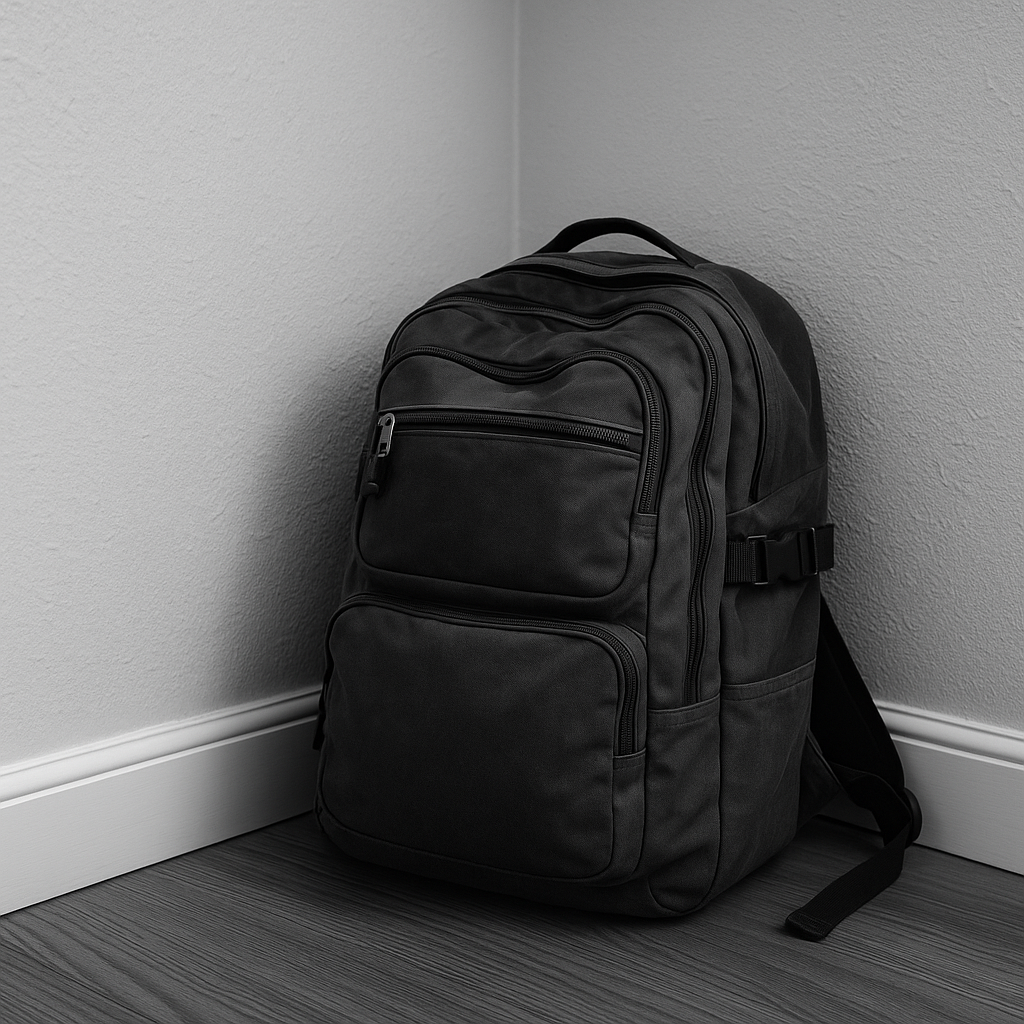
I’ve been a COD as long as I can remember: a Child Of Divorce. While my Catholic elementary school only had 4 other attendees in our childrens’ support group, I know now that I am one of many, hence the military-type classification. There’s an army (or a pod) of us out there. We are known for having relationship issues, exceedingly large backpacks, and a sense of hyper-independence. I am no exception, though I did base those qualifications on myself. I’ve had a bag packed “to go to dad’s” every week since I was about four or five, whenever my two households became places where I would need to change into one thing or another. The first time a COD packs a bag, they do so because they need to change into clothes, into personalities, into hats: whatever fits best at the house they’re at. Then, as we get older, we start to pack our essential items, the ones that we need no matter where we are. My last year of high school, my backpack would contain my prescription skincare, my silver jewelry, my beat-up headphones, and my laptop. Whatever environment I was coming from or going to, I had those. I wonder if the whale pods have essentials. That way, when they get back to water that we’ve made unrecognizable, they’ll still recognize themselves.
I didn’t recognize myself in the window of the train from Vienna to Salzburg. I looked over, meaning to oggle the mountains, not myself, but I couldn’t see past the reflection. Who was this? She was rounder than me, simply put. Her head sat perched on her body without the (previously very soft and curved, yet) streamlined connection I was used to on myself. Back and Shoulders and Stomach are different things on my body, but on hers they were almost one. But I had no seat mate; this woman in the window was me: just a version of me I didn’t know, and, I’m ashamed to say, one I didn’t like very much. I shouldn’t have judged her; I get righteously angry at people for judging her and people like her all the time! But she was sitting there, in the wrong shape, eating Nerds Gummy Clusters. Yes, she was sharing them with her friends, but the image was disconcerting. Who was she? Why had she taken my mind for her body? And why didn’t I like her the way I’m used to liking myself?
I like whales a lot. I feel like they chose me, and that is the kind of flattery I have no choice but to reward with severe favoritism. The one time I let myself relax this past summer was with my cousin McKinley. She moved from our home, Chicago, along Lake Michigan, to another body of water. It was much farther, and, to me, much scarier: the Pacific. She invited me to stay with her in Seattle, and taking her up on it was the best decision I made all year. Her home felt like Heaven, or at least what I believe Heaven will feel like. It will feel like Pacific air through an open window, a plush couch beneath my body, the moon within view, her garden creeping around every wall outside. The whales will find me there again.
We had taken a four hour road trip, something my plane-preferring self usually despised. We drove through mountains– I had never seen mountains this big before. We walked through the forest– I had never seen trees this big before. We sat, eating fresh peppers and good cheese, staring out at the ocean– I had never seen an ocean this big before. I knew we were on First Beach, a natural space kept under the care of the Quilete Indian Americans, but I knew nothing else. So when a tree, or a mountain, rose up out of this giant ocean, I didn’t know what to think. You enormous thing, like the trees and the mountains, you certainly aren’t something I’ve ever seen before. “Holy shit, McKinley, is that a whale?!” It was a grey whale, a mighty and sustaining being to the Quileute tribe. Even the part, the fraction that I saw, was huge. Impossibly, triumphantly, huge. It made every ounce of that road trip worth it.
I am a loyal, once and always, airport kid, so I can’t convert to road trips completely, not even for the whales. See, the upside of having a single dad with partial custody is that his pilot schedule seems a lot more normal– you only see him on Thursday nights or every other weekend, but that’s just when he’s home from trips! Plus, when he gets to whisk you off on free flights, his absence from your weekly routine feels more bearable. Travel brings dad home and home to him. So, I spent a lot of my childhood coming and going, from moms to dads, from Chicago to elsewhere, from home to home. Airports steady me, somehow, knowing that everyone else is also coming and going makes me feel quite at peace. I’ve spent so much time in them over the years that they are more a part of my routine than driving up and down I-90– even though I drove my ruby red Jeep liberty down that highway at least 400 times. Once, I spent upwards of 13 hours in Logan International, hanging out with flight agents. By the end of the night, everyone knew me and my dad, who was scheming, from home, to get me to Chicago on the last stand-by of the night. I was so content, I wasn’t even worried about whether or not I would get home. Sure, I have the unique advantage of knowing my dad could come pick me up in an emergency, but I think there’s a different reason for my calm. Once I’m in the airport, I’m doing what it takes to get home, I’m moving, so I’m going to be just fine.
Homesickness hit me in a weird way when I went to college. I missed my family and Chicago, but I didn’t cure it by going home, I cured it by just going. I didn’t bring a car with me to college, I live a thousand miles away in Boston- a city whose traffic made me long for the Kennedy Expressway at 5pm. Plus, my darling Jeep would never make it that far. I used to love driving, controlling my own passage from mom’s to dad’s, completely in control of how and when I’d get there. Driving, moving, gave me power when I felt like I didn’t have any. But here, where all my classes were within a few blocks from each other, I didn’t move very much at all the first few months. Sitting still turned out to be what made me sick, and while I couldn’t break out Goose – the Jeep – I could cure myself by getting on the road. I got on a bus and went to Northampton, a Massachusetts town about three hours away by bus. I was going so that I could meet my mom for a few hours, but the cure wasn’t just seeing her, it was the fact that I went to see her. I chose to get myself up, hit the road. I stopped standing still, staying in one place. I brought back not just the comfort of my mom, but the comfort of the motion of my childhood. Like rocking a baby to sleep with a lullaby, the comfort was in the movement.
Whale movement is a condition of their survival, rather than their comfort or their familial situation. Particularly now, whales that move are the ones that survive. They move to mate and to feed: blue whales and humpbacks the most. They are also the largest whales, and this isn’t a coincidence. “Their immensity allows them to travel further, to be more adaptable” (Giggs, 168). Being that big, bigger than football fields, bigger than every other fish in the sea, allows them to force their way through the water, displacing it as they go. That’s what “Sounding” means, or at least it does in one definition. Sounding: to measure size through the displacement of water, achieved by whales through diving. Displacing water gets you to your next point of destination, a perk of the necessity created by your size. The bigger you are, the more space you cover, which means the more space you can cover through movement. They can keep swimming, and swim further, to places where they can eat and breed and raise their young. Their size doesn’t just save them, though, it saves us. Within the body of just one whale, 33 tons of CO2 sinks to the bottom of the ocean. Their size makes just one whale more capable than 1375 trees to restore balance to our atmosphere (IMF). Benedict Cumberbatch (via a Museum of Science Industry movie) once told me that whales are just as important to save, if not more, than the rainforest. If whales were smaller, they would die, and so would we.
I thought I had accepted being bigger, though. I accepted it in October. I had to have accepted it, because how else do you move through the world as a fat girl? Being fat has always been out of style, so the only way to be stylish anyway is to own it. To move through the world like you know the water you’re displacing and to be proud of it. I happen to like my body a lot, it does its jobs pretty well, and it takes care of me. It also looks fucking great in my Marilyn Monroe dress. But the body in the window of the train from Vienna didn’t seem like my body. My shoulders didn’t curve with muscle as much as they used to, my back sat rounder than before, my chest sinking as I exhaled. I haven’t sat still in so long, I haven’t had a time to see the change. Was my constant movement saving me from my body? How cruel a thought. That my body is something I need to be saved from. I didn’t hate her, that girl in the window. I just didn’t know her, and suddenly I had to reckon with the fact that my habitat changed. I was in the same body, like the whales in the same body of water they once were, but I didn’t recognize it. It was fundamentally different than before. What do the whales do?
Some of them die. “But these whale species [the big ones], because of their dimensions, and their need to breathe regularly, makes them quite vulnerable to ship strike” (Giggs, 168). In fact, human ships are so big now that most crew won’t even notice if they do hit a whale, sinking it to the bottom of the ocean, to whale falls. How terrible a name, whale falls. A graveyard that required plummeting, a kind of diving, a kind of sounding that no whale would take voluntarily. I made the mistake of Googling one once. To my horror, the first image was that of squid and fish eating the remains of a great blue whale. It was disgusting, nauseating. I couldn’t tell where the whale ended and its vultures began. Its size became sustenance for everyone else, and I’m sure that’s poetic and lovely, in a circle-of-life way. But I didn’t care. I don’t want the whales to die, the squid can eat something else. I want them to only dive through water they choose to displace, I don’t want them to sink against their will. I don’t want to become a victim of my own size, to fall to a place where my body becomes nothing but meat.
But not all whales fall. The ones that stay alive are the ones that keep swimming, the ones whose bodies keep them afloat and forcing through the water for months at a time. I imagine that the big whale is unafraid to fall, she knows she must move, must continue to get up and go no matter what. It’s who she is, as much as her body is. She trusts that she was built to make that journey, she trusts that she has taken care of her body so it will take care of her. She swims, because that is what she’s here to do. She displaces water because that is what it is to be her. “You are built big so you can weather the movement, so you can travel, so you can sustain. You are built big so you can stay moving, both properties intrinsic to you and your life on this planet”. So I sit here now, on my blue carpet, moved to tears. Crying over the whales.
* Works Cited: Giggs, Rebecaa. “Sounding”, Fathoms: The World in the Whale, Scribe Publications, July 8 2021.