The Archives had been shuttered for six months. Funding was always an issue—never certain and rarely sufficient. Money from beyond the city had been shut off two years before; the trickle remaining had stopped at the start of the year. There was little to do: most of the collection would stay in place; file drawers and boxes simply closed, and storage rooms sealed and locked. The oldest, the red leather-bound ledgers documenting the first transactions of the settlement that had become the city as long as four hundred years ago, were wrapped and shipped to a warehouse dug out of a mountain several hundred miles north.
The last director, Duncan Alvarez, had walked home from his office that day, a vow on his lips with each step. He was done. The city had been in his bones; he had been the one who could make sense of, or would take the time to decipher, the faint, faded numbers in the ledgers, the Dutch names and the oddly spelled English ones that followed. Some were his. VanBrunt, Claussen, even Smythe: names that had crossed the Atlantic before the country had come to be. Alvarez, the Spanish name of his father, had come later but still before the end of the nineteenth century. No more. He was done, leaving all behind.
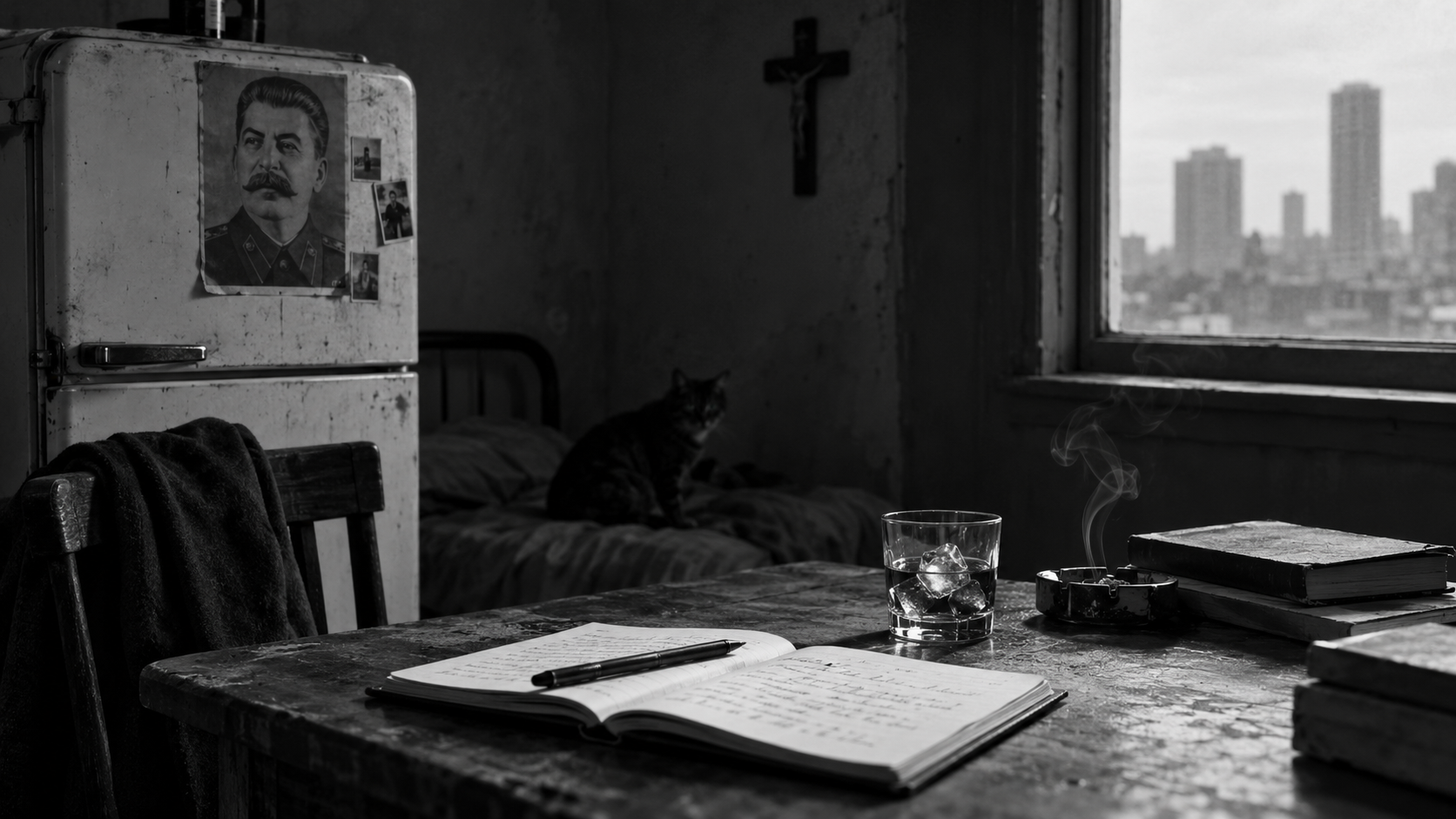
Duncan had rarely left his apartment since. He saw no reason to. Even on his fifty-second birthday two weeks ago. Sybil would not be there; she had left shortly after his last walk home from his office. “You don’t talk to me; we hardly make love anymore,” she said as she was leaving. No, he spent that day as he had most others, scrolling through his computer’s news feed. Wildfires had started again; now they were burning through hundreds of thousands of acres of Douglas fir in the Pacific Northwest. Trash fires in garbage pits that had grown around city after city exploded into neighborhood-engulfing infernos. And peat fires smoldered up near Canada’s Georgian Bay. Fires tunneled through the peat, sometimes a mile or more, until they spewed flames from under the surface and shot up into the trees.
This morning, however, was different. That much Duncan knew. He had been aware of strangeness in the night. Strangeness was not the right word; it was something burning, an anger long held silent. He thought so. “What the hell were we talking about? I must remember what set Sybil off.” She had called, breaking the silence between them. He looked at the blank screen on the laptop; he hadn’t closed it. He had been looking at a video. Sybil told him to look for it; she said he would see the fires and mobs spreading across the city. The video was no longer there when he hit the return key, only a message stating that viewers were no longer granted access. “Damn! Useless.” Slamming the screen shut and tossing the laptop onto his desk with the rest of the mess; he was sure there were bills and other bits of paper he had printed out days ago. Or maybe several weeks ago. There had to be a day to make it right. But not today.
“What’s that noise?” Some sullen, soft scratching near the window. A few steps across the Turkish carpet—it had been his mother’s, and he felt in her presence time and again when he stepped on the geometric reds and blues and blacks. Had this been a garden in the eyes of the weavers long years ago? Or of those who were first to stand on the new wool in the bazaar before it had been bought and shipped? Faded colors and white threads showed the paths worn over the years to the windows at the front of the apartment. Tall, narrow windows with leaded glass panes and flaking white paint, as old as the building. Heavy floor-to-ceiling drapes covered each. Another bequest. The drapes, the Turkish carpet, the walls, windows, and doors—his mother’s apartment, willed to him when she died. He knew this prior to her death; in fact, he had been living in the apartment for close to a decade by then. She had left the city, moving with a new husband to Tempe or Flagstaff or one of those high southwestern places he couldn’t place on a map and had no interest in ever seeing. Sudden, as so much of her life was. At least as Duncan saw it. One day, she had called him at his office at the Archives to say she was flying out with the new husband—Bill? He never remembered any of her husbands’ names. Other than his father, Lawrence, who had died when he was just starting kindergarten.
Duncan could get little out of her; she was flying out that day; she couldn’t stay in the city any longer. She feared everything around her; the mountains were better. And the apartment was his. That was it. He already had the keys and all the ancient, dark pieces she had collected as the oldest daughter in her old, old family. And so, he moved in, taking over the apartment, changing little, just allowing his clothes and papers to take over space and gather dust and age. Sybil, when she was there with him, made it right, okay. He sucked in a breath and looked to his right, expecting to see her. It was only an image in his mind.
“Pull the drapes; there should be light.” The apartment was on the first floor looking out onto the Square. Night or day. There was light. Now red. Orange. Haze. All three combined in a miasma. Gathered into clouds swirling in the wind, dust and paper scurrying about in small whirlwinds. No movement. Nothing else seen. Nothing like the view from this window just the other day. Or was that longer ago? “Duncan, you idiot!” He could not remember the last time he had stood at this window; it wasn’t yesterday. That he knew. It had been several days since he had looked out, even longer since he had left the apartment.
A balloon caught his eye: black mylar, not fully round—two sides defined. The wind wedged it between two bare, early-spring branches on one of the several trees planted in pits years ago at the edge of the sidewalk. He knew building owners did those sorts of things then, more than a century ago, but not now. Nor did arborists, that was a good word for the teams of men, and they were only men, who came to the park and the surrounding streets every few years to cut away dead limbs and prune ever-encroaching growth. A sudden gust bent the branches, dancing the long lower branch directly in front of the window, rubbing the balloon across the pane. A scrawling, almost plaintive squeal. Duncan saw Tragedy’s Mask seen on old movie reels formed on one side. The branch recoiled back, scraping the mask past his face again. Comedy’s Mask was not on the other side. He looked for how it was tethered; weren’t these always caught when a sudden wind or careless grasp allowed the balloon to float up and away from a child who had so proudly held the ribbon or string keeping the magical, airborne object close to hand only a few moments before? It was hard to see or imagine that was what had happened here. No scrap of string or ribbon evident.
This was no longer the world he remembered. “I think it was Thursday; it must have been.” He had to stop talking to himself, get under control, but he could do that another day. Sybil had called, after so many days and weeks of silence, a certain desperation in her voice, “Duncan, pick up! Pick up the damn phone! I know you’re there! That rabbit-warren of an apartment isn’t that big! Duncan!”
Why had he answered? Not a whim or hope of release from boredom; he had been slipping away. Her voice brought him back.
“Hello.” Brief. Keep it brief and keep it under control.
“Duncan, my god, Duncan. I can’t keep this up; it’s too much!”
“Too much?” Calm, keep calm. He remembered that. “What?”
He only had snatches of the conversation now. She had not calmed down. He did remember that. Sybil kept shouting, calling his name. There were fires in the West and wildfires spreading now in Eastern forests and no one could go out. The city she knew—that he knew—was gone as well.
“But I rarely leave to go out in any sense of the word.”
“We can’t all be you; we don’t have apartments on the Square; we don’t have dinners brought in; we don’t have libraries and maids’ rooms!”
From their past he knew there was nothing for him other than to listen. To play his part with an audible sigh or grunt from time to time as her language and wildly spun stories went further and further out of control. Until she tired. Until she yelled, “Fuck you, Duncan, fuck you!” And cut the connection.
Last night’s call was different. Remembered now, each word incised in his mind.
She had calmed down. That, at least, was different.
“I apologize, Duncan.”
“S’okay, Syb, it’s okay.”
“No, I’m sorry. Shouldn’t have screamed at you.”
“We’re past that.” What did she want? What was this about? Again, it was for him to stay steady. Wait.
Finally, “I’m being hunted. Watched and hunted.”
“What are you saying?”
“There was a man standing at the building on the corner. Dressed top to bottom in black. I was coming back from the bodega on the corner. I couldn’t see his face because—it was completely covered with a mask; everyone has masks—everyone!”
Wait. Not even a grunt or “uh-huh” now.
“He said something to me; he called me something. I think he said something like “Watch it!’ I think he followed me. Not sure.” Duncan felt minutes pass. “I was walking as fast as I could…practically ran into my building.”
“Your doorman was there to help?”
“Duncan…Duncan! Where the hell are you? We’ve hadn’t had a doorman in months; every time I turn around, the building has cut another service, another staff member. We count ourselves lucky that the super hasn’t left. I don’t know why he stays.” Another time to be quiet, to still himself. “Most have left. The connected, the rich, have moved. Some downtown. Or fled.”
“Yeah. I heard.” He wondered what he had, in fact, heard. Or read. Or seen. The first reports were about a disease that had jumped from wild birds to domestic fowl and then stock animals. And then, of course, people. It was several years before. Maybe more. Then there were stories about hordes having to live in camps—in parks across the country and under crumbling bridges along no longer used highways. Was it the same?
What was she saying now? “…Duncan, can you come get me out of here?”
“Sorry, vagued out there.”
“Dammit, Duncan, damn it! I need you present. Here. Now! Not in some la-la land of your memories or whatever it is you get up to in that mind of yours.”
“I’m here. I’m here. And I’ll stay. I promise; I do.”
“Good. You have to.”
More silence. Now, she was screwing her courage to ask him for something, that he knew. Was sure of. But he would stay attentive. He could listen to his own breathing. Count each breath. He wouldn’t guess what she might say.
“Please. Come get me. I’m so frightened; I can’t stay here another day. And don’t say all the reasons you can’t. There’s no one else left. And you can. Duncan. For us. We did love each other—part of me still does. I know you can. If you set your mind to it.”
“It can’t be that bad. Just a scare…it should be over in a day or so. People will start coming back to the city. I know they will.”
Now she was shouting. “You’re not listening! Jesus H. Christ, Duncan, you must listen! The city you knew is dead. It’s been dead for months, maybe more. The masks are everywhere; people are being hunted. I know they are.”
“You can’t mean this. What do you want from me?”
But she did and she expected rescue. They went on. He saw her—he saw himself—as they were shortly after they met, before she moved in. Day by day, he was falling ever more in love with her. He remembered sitting on the floor, talking on the phone for hours on end, watching football games—apart and together, betting on a field goal, or who would score the next touchdown, only rarely on who would win the game. He usually lost. She always had a much clearer sense of the odds and the reality.
Her reality was changing.
“Duncan, please. I’m begging you! Come get me. Take me back to your apartment…I won’t bother you there; I promise. You know I can do that. You know that. You must. I’m dead if you don’t.”
Sybil’s fear and anger had reached him, welling as he looked out on the Square. There were figures moving about. He could see that now; it was more than just whirlwinds of dust and the red haze in the sky. There was a fire at the far end, a small crowd around. Movement each minute or so as two or three dark shapes moved away, heading off into the neighboring streets. Or coming from them. To throw trash and broken wooden barricades on the fire. Flames leaping higher, black smoke swirling higher and higher in the wind. A sudden gust knocked branches against the window; he heard the squeal of the Tragedy Mask ballon as it rubbed against the window and suddenly broke free, shooting up, glancing and bouncing from branch to branch until it cleared the treetop to disappear into the haze.
He knew his mind then. Closing the curtains, he crossed back over the rug, past the hallway and kitchen to the small room just at the end of the apartment. Called a maid’s room on the building’s original plans—he had found these plans when he and a few remaining staff were crating the archives of some of the original cooperative buildings in the city—but it had not been that for years. Certainly not for the years he had lived there, nor even when his mother had been alive. It had become little more than a large closet, a place to store papers—yes, more papers he knew now he would never sort and organize—and some clothes and a small safe.
The pistol, a forty-five-caliber automatic, stainless steel with gray ceramic grips, had been delivered to the apartment buried in a large carton of books. Nestled in a yellowed scarf a man might have worn to the opera. Wrapped up carefully with a pair of chamois gloves. This was shortly after his grandfather died. His mother had lived in St. Louis when she was young. They had dogs, then. Large black and tan Alsatians who roamed throughout the house and the property; it was a time of labor riots, or the fear of them. His mother wasn’t sure; she was little more than five at the time.
He had kept the pistol all these years. He would take it out from time to time to make sure it was clean and well-oiled. Tasks he had honed as a young army officer. There had been no question whether to serve; he could trace the army back to the very beginning of the country. He had excelled at soldiering and at weapons training, particularly with pistols at the target range and on the assault course.
There should be a full magazine. He took the pistol from the safe, snapped the magazine out of the butt; they were all there—nine rounds. Chambering one and checking the safety, he jammed the forty-five behind his belt at the waist. Duncan headed back to his bedroom. He would stay in jeans; he rarely wore anything else anyway. Out of habit, he checked his back pockets to make sure his wallet was on the left side and his cell on the right. He added a black pullover and black boots. A dark green, hooded rain jacket from the hallway closet. A mask! He needed a mask. “There were some in this drawer; I’m sure there were.” From another plague, some years back, now. White, not black. He shoved it into his pocket. “No time to find the black ones; this will have to do.”
Duncan stepped out into the building’s lobby, taking a few moments to make sure both locks were set. So many years since he had first stepped into this space; his mother had brought him to visit his aunt, it was the aunt’s apartment then. Marble floor, marble columns. White, black, almost a harlequin design, glowing in the chandelier lights—they must be in their second century now. Abraham was on the door; it must be Wednesday then.
“Hi, Mr. Alvarez.”
“Duncan, Abraham, please call me Duncan.”
“Sure, Mr. Alvarez, sure thing. Think we’ll have baseball this year? I miss those games.” The doorman took a pace or two toward the door. “You sure you wanna to be goin’ out? You haven’t for a long time, now. A lot has changed.”
Duncan knew that was certain; he had not been out of the apartment in more than a month; he hermited more and more since that last day he had walked home from the Archives. Even then he had found little to move him from the apartment. And after, it was easier to stay in place, calling a Chinese restaurant several times a week and only venturing out for frozen meals, cans of baked beans, and cereal that made up most of his diet. He was hoarding things now. But, also in truth, he had seen much of what had changed. Until the fires had subsumed all coverage on his news feed, he followed how farmland in the middle of the country was abandoned, a coal mine in Wyoming, once operating at full capacity, could now ship little more than a single freight train of no more than fifty cars a week to a power plant in North Carolina, and two Texas refineries had closed. There was little news from Washington. Or even City Hall. Buildings seemed to be more empty than not. Services appeared to work only from memory.
“I need to see a friend. Uptown. I should be fine.” He needed care for the questions he asked. “Is the subway still running?”
“Oh boy, when was the last time you been on the subway?”
“A while, I guess.”
“A lot of changes. A lot of changes, Mr. Alvarez.”
“Duncan.”
“Know about the barrier?”
“Yeah. That was put up a month or two before the Archives closed. But the subway was still going to run north of there. Does it?”
“Barely. There’s only one stop in the city. Then a straight run all the way up to where Sam & I live. Then walkin’. No busses.”
“Where’s the city stop? The one past the barrier?”
“Not sure it’s really a stop, not one like there used to be; the doors open only for a moment or two. I’ve seen a few get on when I’m comin’ down. Never saw someone gettin’ off goin’ up.” Abraham paused, glanced away, toward the end of the Square. The fire was still burning, larger if anything. He looked back at Duncan.
“Them gettin’ on are pretty rough. All black clothes and masked. Wouldn’a mess with them. Know what I mean?”
“But it does stop, you say.” He knew Sybil’s apartment was a few blocks north of that old station; he could walk easily enough.
Abraham was not convinced but understood there was little more for him to say. Except, “Take this.” He reached into the bag by the desk and pulled out a black mask. A Tragedy Mask. “My brother got a few extra the other day.”
“Will I need this?”
“Maybe. Maybe not, Mr. Alvarez. I see people with these. It used to be only above the barrier, but now even around here. I wear one when I am goin’ home. I feel maybe it helps me to blend in; people don’t hassle me.”
Duncan took the mask and tucked it into the inner pocket of his jacket. “Thanks.” And walked out to the Square, the fire burning even more intensely in the far corner. Dark figures still milling around all sides as though it were a rally of some kind. What were they wrecking and tearing apart for fuel? Even in the haze still shrouding the sky, he could see sparks and dancing flames, reaching as high as the third or fourth floor of the buildings behind. He thought there would be no good ending. He turned his back to the Square—there was nothing for him there—and started to walk the few blocks west toward the station he had gone to year after year. There was certainty in that.
A stationary store displayed a different certainty. Shuttered and closed, dirt and trash heaped up against the base of the corrugated metal barrier that was double-locked at each end. Posters and flyers were pasted to the metal in layers, torn, pasted over again, torn off in strips, exposing another layer—faces from another time and graffiti more recent. The restaurant adjacent was also closed, but no dirt or trash was lying about. Gray painted plywood panels covered the two large windows that faced the street—a black Tragedy Mask stenciled on each. Duncan stepped closer to the windows to read the message stenciled on the lower right-hand corner: “Warning! Do not approach!”
He would keep moving.
The subway entrance was familiar. Where were the people? He remembered larger crowds the last time he had taken the subway; a few days after he had walked home from the Archives the last time, a Sunday. There were more people then. More lights as well; a gloom now rendered the space around the turnstiles and down onto the platform by the track into daubs of yellow and dust and discarded papers. No people. Silence. Where were the homeless? The buskers? Both were always there year after year. Now nothing. But an advantage at the moment. He realized he had no card and didn’t want to use his phone just then. He remembered kids—young boys, young girls—kicking their legs over the bars of the turnstiles while they pushed themselves with their hands on each side. Some did it in a single movement so fast that at times he hadn’t even realized they had been there. Taking more care, thought, and time than necessary, Duncan got his legs and feet over the bar and down on the ground on the other side. He didn’t fall. Nor did the pistol do anything more than dig painfully into his back.
Silence and gloom deepened by the track. Not another person. But there were lights far down the track, one stop south of where he was standing. Two large rats scuttled across the rails and out of sight under the platform directly below.
The clatter and shrieking wheels and brakes were familiar. The doors rattling back after the bell sounded. And closing behind. “The last stop on this train will be Windmere—242nd Street. There are two stops before the barrier on this line. The last stop will be Windmere—242nd Street.” Sitting and looking about. One other person in the car, who sat down on the subway’s bench directly across. Black-gloved hands at the edge of the seat on each side of his thighs. Black boots placed slightly apart and flat on the floor, black jeans and tight-fitting sweater. Fit looking. A black knit cap pulled low down on his forehead; the rest of his face covered with a black Tragedy Mask. No movement as the train stopped at the next two stations and no movement as they arrived at the barrier. Duncan took a deep breath in through his nose, carefully placed his hands on his knees, and returned the gaze of the black, masked face opposite.
Bright lights now. Strobes crossing up and down the subway cars. “The last stop on this train will be Windmere—242nd Street. This is the barrier. The last stop will be Windmere—242nd Street.” The doors closed.
“You should not be here.”
Duncan remained silent.
“You should have got off at the barrier. You’ve made a bad mistake.”
Still silent. The train rattled north at great speed. Every thirty seconds or so he could see they were passing through an abandoned station. Flickering lights, but the train never slowed. Until it did and crawled into a station that had not been used for decades. The walls were black with the grime and soot of years, covered with graffiti from days when a different anger and fear took young people, mostly boys, down into the tunnels in the small hours of night to tack different forms of bragging in white and every fluorescent paint imaginable. There were no Tragedy Masks—not yet. A single door at the front of the car opened. Duncan stood.
“I think I will get out here.”
The man in the Tragedy Mask started to stand. Duncan reached behind his back and pulled the pistol from his belt, motioning the man to stay still.
“Give me your phone. And move slowly, or I will shoot you.”
The man pulled a cellphone from his right front pocket and held it out to Duncan.
“Put it on the floor. Slowly.” Duncan pointed the pistol’s barrel toward the rear of the subway car. “Move over there. Careful. Nothing sudden.” The man took a few steps to the rear of the car and turned back to face him. Duncan took one step to the center of the car and suddenly brought the heel of his right boot down on the cellphone, shattering the screen and case.
He stepped to the front of the car and out the door, tucking the pistol again in his belt behind his back. The single door closed as soon as his feet were on the platform, the subway immediately pulling away from the station. He could see the man, pressing his masked face to the last window as the car rattled and screeched up the track.
The homeless, the vagabonds and drifters, were here. Real inhabitants of the city, at least. A makeshift encampment had been built on the old platform. The gloom prevented him from seeing past the far end of the platform—tents and rough shacks crowded together. Shapes and figures stirring—quiet movement. Duncan didn’t want to see more and turned away to climb a set of rusting iron stairs leading to an access point and a door that had every appearance of being from the first days of the subway. A great-great aunt or some such relation may have ridden the subway then. She once ran an art gallery off the far side of the Square. Two large chows, fur the color of burnt ochre, padded among the rooms and around the displays at night. A satisfying image.
Above ground. There were more people. Some walking. Some, mostly men, but not always, were huddled together. Some were masked; some not. Talking. Looking at him as he passed. He thought looking at him as a stranger, as an unknown. He stepped behind a derelict trash skip, left from a demolition project begun but never finished, and put on the black Tragedy Mask. Walking quickly, now. With purpose. He could be at her building in a matter of minutes. He was certain he knew each step; he could count the footfalls exactly as they led him along the road, its current street name signs torn down or painted over in black. Some buildings were familiar. A few boarded up, some open. He wasn’t sure but thought those who would have looked at him before looked away now. Avoided catching his eye. More readily let him pass.
He was certain there had been climbing ivy reaching up and covering the first two floors and framing the entrance. All that had been pulled down. The small garden in front, also gone. Just trash and vermin holes in its place. She said the building didn’t have a doorman anymore. He stepped forward to figure out how he would call her or let her know he was out front when a young man, not wearing a mask, pushed the door open. The man started, stepping back quickly, when he saw Duncan standing in front of him. But he did not close the door, rather, he stepped further back and held the door open. Duncan stepped through.
The elevator at the back of the lobby still worked, and he was standing at her door. She screamed as soon as she saw him, falling back in terror.
Duncan yanked the mask off his face, threw it on the floor beside him, and grabbed her by the shoulders, pulling her back to him. Pulling her upright. Pulling her away from the terror seizing her.
“No! No! It’s me! It’s okay…it’s okay. I came for you.”
She stood frozen. Still. Her eyes wide, staring, not blinking, terror still there. Her mouth pulled back as though she was looking at death. She blinked. Gasped. And folded around him, sobbing into his shoulder. Shuddering and breathing. Slowing now. Quieter.
She stepped back. “Duncan, I thought…I thought you came to take me, to kill me.” And quickly slammed her fist into the side of his neck, knocking him back into the hall. Panting, “God dammit, Duncan, damn it!”
He thought he might vomit; he clutched at his knees, grabbing the fabric of his jeans to keep from falling further. He slowly raised himself, finally standing upright. He could move his head; his breath evened. “I’m guess I’m glad we’re older now. We only have one or two punches left.” He looked at her. “Are you done?”
Sybil folded herself back into his arms. A burst of laughter. “I guess so. But what were you thinking? I told you about the masked man who followed me the other day! Don’t you remember anything?”
“The mask got me here, and I’m here. Let’s stay with that for now.”
“We must go. We can go right now back to your apartment; I can’t stay here!” Duncan opened his arms so she could turn back into the living area of her small apartment. So much looked familiar. Books on books in every possible place, canvases stacked everywhere, a large portrait she had done of him hung above the small table next to the kitchen. She had made it shortly after she moved into the apartment on the Square; she would not give it to him, even then. She had taken it with her when she left. “I can’t live this way. I need to live alone, to have my space. I need time for my painting. But I need to have you with me.” That had worked for a time. There would be days, even weeks, of sharing his apartment or hers. Or trips. Weeks on end when it worked for them. And phone conversations in between. But even that ended. The energy that once pushed them together now pulled them away from each other. Until recently, when she called, when her increasing anxiety, fears, and anger called out to him.
“I have a bag here; I know I have one somewhere.” She turned around. “There it is.”
Her apartment was so familiar, but when was the last time they’d been together? When had he last seen her? He knew they had dinner near his apartment on the Square; he thought it was the week after the Archives were closed for good. He had hoped, but she did not stay over then. Duncan took her bag and guided her to and out the door, picking up the black Tragedy Mask as they stepped into the hall.
“I need to put this back on. I think it helped me get in here. I think it will help us get out.”
They had not walked far from her building. He saw two figures dressed in black, masked. Duncan pulled the pistol from his waist. He knew he would use it. A few more steps. He fired. One figure staggered and fell. The other fled.
“Come!” He pulled at her arm and started in the other direction. Toward the park that ran near the river. “Walk, now. Walk and don’t look around.” It was little more than a block or two and they were in the park. “We can’t get below the barrier. Not now.”
“Where?”
“I’m not sure. Maybe we can work our way into the encampment, the one back at the subway station. But I don’t think I can make any sense of it unless we stop. Let’s sit.”
They found a bench close by. Set in a small glade, they felt apart, away from the streets they had so recently left. Still. Some sunlight, late sunlight, glanced off the water; the haze had lifted.
“Duncan! Crocuses! They’re in bloom!”