In this episode of Call To The Editor, we speak with American short-story writer Corey Mertes, whose work The Doctrine of Signatures appears in our Winter 2025 issue.
Corey Mertes is a storyteller whose eclectic background spans law, casino floors, and now full-time fiction writing. Born and raised in Chicago, he holds a bachelor’s degree from the University of Chicago, an MFA from the University of Southern California, and a law degree from the University of Missouri–Kansas City. His short fiction has been widely published and acknowledged in numerous literary journals and competitions. His debut short story collection, Self-Defense, was released by Cornerstone Press in February 2023 and was met with critical praise for its richly drawn characters and lyrical precision.
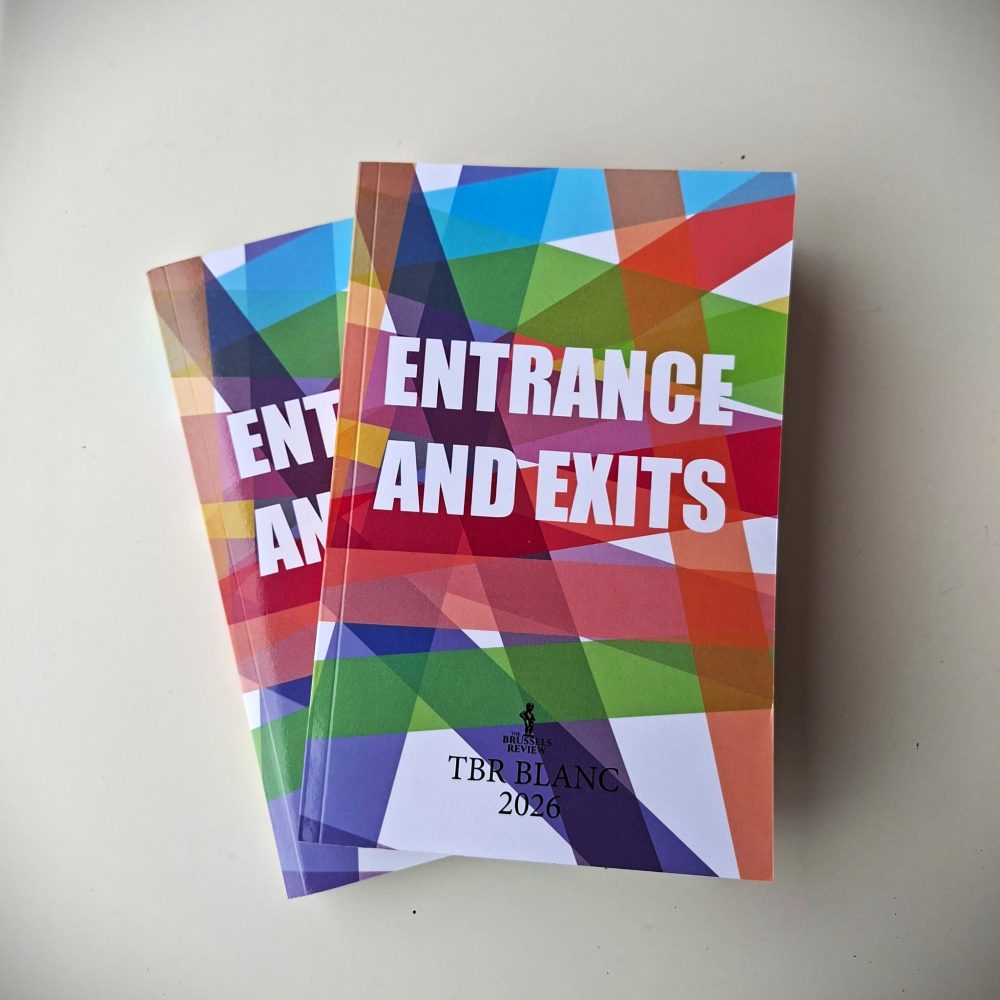
We explore Mertes’s creative process, the structure and themes of The Doctrine of Signatures, and the life experiences that inform his work. You can order the Winter 2025 issue at shop.thebrusselsreview.com with the code CALLTOTHEEDITOR for 25% off through January.
We are also grateful to our sponsor, the Art and Creativity Consortium (ACC), whose support enables The Brussels Review to bring literature and thoughtful cultural conversations to our audience.
Femke van Son: Hello and welcome to this episode of Call to the Editor. My name is Femke van Son. I am a fiction editor with The Brussels Review, and I am here today with Cory Mertes to talk about his story, The Doctrine of Signatures, which is featured in the Winter 2025 issue of The Brussels Review.
You can get the winter issue at shop.thebrusselsreview.com. Use the code CALLTOTHEEDITOR to get 25% off until the end of January. I would also like to thank our sponsor, ACC, the Art and Creativity Consortium, the organization that supports the publication of The Brussels Review and its wider cultural initiatives across Europe.
If you are a creator, writer, small publisher, printer, or an organization dedicated to supporting art and literature, we invite you to connect with us. Visit artcraicon.org to learn more and become part of the Living Cultural Network. So let’s get started.
It is lovely for you to join me today, Cory.
Corey Mertes: Well, thank you for having me, Femke. Appreciate it.
Femke van Son: Yeah. So can you briefly introduce yourself, tell me where you’re based, and what occupies you on most of your days?
Corey Mertes: Well, I’m based in Kansas City, Missouri in the United States. I’ve been here for about 25 years, and I’ve been writing full-time for about five years. Previous to that, I had been a real estate attorney for 13 years, and before that, I was in the casino business as a pit boss and a dice dealer.
Femke van Son: Wow, that’s quite the trajectory.
Corey Mertes: Yeah, it’s unusual. I usually give it to people a little bit at a time because it’s such an unusual arc that people have a little difficulty grasping how I would go from one thing to another.
Femke van Son: What got you into writing, if I might ask?
Corey Mertes: I’d been writing off and on for years while I was practicing law, and before that, and even when I was in school. I’ve always kept a notebook of odd things that I see, things that I find interesting, ever since I was a teenager. It seemed natural that eventually, I would turn to writing full-time.
I’ve been publishing stories in journals like yours for 20 years, and it was about five years ago that a publisher here in the United States picked up a collection of them, my first book, about five years ago, and I realized that I could probably stop practicing law at that point and just write full-time, which is what I’m doing.
Femke van Son: That’s awesome to hear.
Corey Mertes: Yeah, it was kind of a dream come true for me, to be honest.
Femke van Son: I think that’s a dream come true for every writer, so it’s wonderful to hear that you’re living the dream.
Corey Mertes: Yeah, it happened a little late, but better late than never.
Femke van Son: Indeed. So let’s talk a little bit about your story with us, The Doctrine of Signatures. I think the concept of a series of little vignettes that tell the story of a couple across different parts of their lives is a great way to get to know these characters.
It offered, in my opinion, a more diverse and varied view on their lives than a single linear narrative. How did you come up with the idea to tell the story through these small little episodes?
Corey Mertes: I appreciate that. To be honest, I got the structure from Dennis Johnson, who is one of my favorite writers. He wrote a story in his collection called The Largesse of the Sea Maidens, I believe is the title.
That has a similar structure. It’s not exactly the same, but he does take vignettes from a couple’s life and puts them together from various time periods. It worked for me.
I looked in my notes to see if anything that I had would work for that structure, and I ended up taking bits and pieces from all over my life, honestly, notes that were 40 years old and notes that I picked up in the last year or so. I was able to compile them and use them with this structure. I credit Dennis Johnson for that.
Femke van Son: Okay. This story, could you describe it as a compilation of various things that have built up in your own life then? It’s not about me.
Corey Mertes: No, it isn’t about me, but I was able to use some incidents from my life to effectively describe this young couple. The primary example, the title itself comes from an actual event that took place when I was 19 years old. It was the first time I wore a tuxedo.
My father was on the board of an opera company. I won’t say which one, but as part of his duties, he was invited to a black tie dinner, and he had me go with him with the entire opera company prior to opening night. I happened to be seated next to an elderly woman who was associated with one of the people who was a part of the opera.
She was a bit of a bore, to be honest with you. She was telling stories of all her travels and not actually having a conversation, just saying one thing after another. Across from us were seated a doctor and his wife.
I think they were bored by her descriptions also, and as a way of interrupting her, he started talking about this concept called the doctrine of signatures, which he had learned about years before. That is one of the seven vignettes in the story, and it’s an actual thing that happened for the most part. Of course, I altered it a little bit for narrative purposes.
Femke van Son: That’s cool to hear that you drew that from an actual experience, because it’s such a nice little way to end the story, also to bring it back to the title.
Corey Mertes: Yeah, it had always stuck with me. It’s really remarkable how the writing process works, as I’m sure you know. This, again, was something that happened to me 40 years ago.
It struck me that day. I put it in my notes, and it just sat there for years and years. I’d been trying to come up with a concept.
The doctrine of signatures, the story, happens to be the title story of my second book, which is coming out in about a year. All of those stories involve relationships and how people subconsciously seek in a partner qualities that help them mend whatever emotional infirmities they might have. In seeking a way to describe that, I came across this note about the doctrine signatures, which is a way that pre-Enlightenment doctors used to describe how plants and animal parts might be used to help cure infirmities that resemble the plants themselves.
It acted as a nice metaphor for what I happened to be searching for.
Femke van Son: Thank you for explaining that, because that’s a wonderful way to tie that all together and explain how the title works in tandem with the themes of the story.
Corey Mertes: I’ve mentioned this doctrine to multiple people. When I tell them the title of the book and the story, nobody’s really heard of it, which makes sense because it’s now considered pseudoscience. This was before the scientific revolution, but it had existed as a real thing in medicine for centuries, beginning with Dioscorides in the first century, a Greek physician who’s considered the father of pharmacology.
This idea, again, that you can take plants that look like a part of your body to cure ailments for that part of the body is fascinating, really. In some cases, it really works, but of course it’s more or less coincidence that it does. Anyway, I’ve always thought that people are subconsciously seeking out others who cure or attempt to cure whatever’s wrong with them emotionally.
Femke van Son: Yeah, I think a lot of people can relate to that, definitely. Is there a particular part of the story that really resonates with you? Do you have a vignette that you would call your personal favorite, and why?
Corey Mertes: Well, that one, the last one, which is called Outer Mongolia. I suppose because it tracks so closely with something that actually happened, because it stuck with me for so long, and because this doctor kind of saved me from a really boring evening by making this description. Anyway, yeah, I would say that one. But really, there are seven vignettes, and all of them have something to do either with my own life, or they’re just stories told to me by others, but most of them are true. The story, the little vignette called, oh, what’s it called? Ja Read was also something that happened to me many, many years ago when I was traveling in Europe in Salzburg at a reggae concert.
That one tracks pretty closely to something that actually happened.
Femke van Son: So this was a very personal project, then, writing this story. Did engaging with these stories that you’ve taken from your own memories and other experiences, did it change, like, your opinion or your thoughts about what actually happened to be able to reinterpret them like this?
Corey Mertes: Hmm, that’s a good question. I haven’t really thought about that. No, I wouldn’t say that it has.
Again, although I took incidents from my own life, it ultimately isn’t me that is the character. I know you’re a writer also, so you know how that works. You take incidents, but really, you don’t want to be talking about yourself.
You want to be talking about something universal and about others. So it really didn’t change my view of anything having to do with me.
Femke van Son: And what does your writing process look like? Do you plan everything meticulously in advance, or are you more of a pantser who follows the story as it goes along?
Corey Mertes: I absolutely plan things in advance, and I outline thoroughly before I begin. But then once I begin, the story has its own life, so it often takes me in directions that I don’t intend it to take. I do something that might be a little unusual, and I learned this from doing crosswords.
I’m an avid crossword puzzler. I found years ago that you can do a crossword better if, when you’re stuck, you just set it aside for, say, an hour or a couple of hours, and when you come back to it, your mind has worked on it subconsciously. I have used that in my following way.
I always have three or four stories going at once, but at different stages. So, for instance, I will finish a first draft of a story, and then I will set it aside for a month and begin a second story. And now I’ve got a first draft of that second story, and then I revisit the first story.
Ultimately, I wind up having three or four different drafts at three or four different stages. So, I’ve always got this period where I’m subconsciously working on one story, my mind is, and I’m physically working on another story. And I’ve always found, even when I feel like I have a final version, like this is a version I’m going to send out, it’s done, I still set it aside, come back to it a month later, and voila, it’s no good.
It just simply doesn’t work now that your mind has worked on it. And so, I begin again. So, maybe that’s not uncommon, but anyway, that’s how I do it.
I have three or four things working at various different stages, and my mind is always working.
Femke van Son: I relate to that quite a lot. I also do crosswords myself, and I know that feeling of you can’t figure out what the answer is. So, you set it down, and you come back the next day, and suddenly it clicks.
Corey Mertes: It’s strange how it works that way, isn’t it? It’s a revelation. Your mind keeps working.
Femke van Son: And I’m working on my own first novel, and sometimes I can’t figure out where I need to go, so I step away, and then I come back a month later, and I have it figured out all of a sudden.
Corey Mertes: Well, there you go. I’m not unique in more ways than one.
Femke van Son: Yeah, it’s wonderful to hear about these universal experiences that a lot of writers have in those experiences, I think. How do you want to see your work in the wider literary or cultural context of today? How do you want to see it interpreted?
Corey Mertes: I don’t have any kind of agenda for my work, certainly nothing political. And each individual story stands on its own. So, really what I want people to feel is that they have been exposed to something each time they read one of my stories that provides them with a fresh take on some universal truth.
That’s it. And that truth will inevitably be different for each story.
Femke van Son: Yeah, that’s good wisdom for that, I think. What’s next for you in terms of writing or other artistic pursuits?
Corey Mertes: I continue to write. As I said, this is the title story of a second book which is completed and is going to be published by Cornerstone Press in early 2027. But I have a third book in the works that I should be done with by the end of this year pretty soon.
I’m almost done. That book’s going to be called Men Acting Badly. I realized the stories I had left over, about a half dozen of them after I finished the second book, all involved male characters who, frankly, act badly in one way or another.
And so I set out to fill out the rest of the book with similar themed stories. And that’s what I’ve got, about a dozen stories for book three. So I’m just about done.
Femke van Son: Nice, I’m glad to hear that. And where can readers find more of your currently published work?
Corey Mertes: They can find the first book, Self-Defense, anywhere where good books are sold, online on Amazon or Barnes & Noble or, frankly, anywhere. Again, it’s called Self-Defense. Kind of have to know my name to find it.
If you just type in Self-Defense, you’re going to wind up with martial arts books. But you can find Self-Defense. Corey Mertes, just Google it, and it’s all over the place.
I don’t know where it is in Europe, in bookstores, probably hard to find there, but you can find it most places in the United States. And the second book should be similar. And again, it comes out in early 2027.
Femke van Son: Perfect. And do you have any closing statements you want to give before we end the interview?
Corey Mertes: No, nothing comes to mind. I’m really grateful that you’re doing this. It was a nice surprise to hear that you were doing a podcast, and I’m looking forward to hearing the other writers.
I did love something your editor wrote just this week, I think, on your website about the criteria you use for publishing stories. I thought it was extremely well written and tracks closely with my own ideas. So I was pleased to read it.
Femke van Son: That’s nice to hear. So once again, you can find the winter issue of 2025 of the Brussels Review on our website. And also another thank you to ACC for sponsoring the Brussels Review and ensuring that we are able to bring wonderful literature like The Doctrine of Signatures to the world.
So yeah, until next time, thank you so much.
Corey Mertes: Thanks so much, Femke.