Redding figured for his next run he’d drive straight down from El Paso to Chihuahua City on Federal Highway 45. Returning with a carload of Chinese migrants, it was best to go around, making the northwest-northeast loop on the two-lane routes 10 and 2 to avoid migrant checkpoints. Where Route 2 neared New Mexico, he planned to use a dirt road going due north. Forget about El Paso.
He sat in a diner booth with padded orange seats in Las Cruces, New Mexico, eating his breakfast and poring over maps on a tablet. He used to drive his clients from Hermisollo to the famous gap in the wall at Jacumba, near San Diego, but that was a bust now too. In any case, now that almost the entire border was shut tight and thousands were being deported daily, he could charge more to get them across. Then he would go through the El Paso border checkpoint and collect them on the other side and take them north to Las Cruces.
He was divorced and retired DEA. He knew Mexico fairly well, and he smuggled Chinese migrants who had a bit of money because all he wanted was to get out of the U.S. now that Trump was in his second term and destroying the country helter-skelter. He wanted to retire in Thailand, hot and humid climate be damned.
He’d been posted to Thailand for several years some time ago, after his divorce, as a liaison officer dealing with the opium Golden Triangle. He’d made a couple of incursions into Myanmar with the Thais, but Myanmar was as dangerous as Juarez in Mexico and he wasn’t supposed to be there anyway. He’d seen more death than he would have wanted, but he was one of the lucky ones who did not suffer from PTSD, and the experience had toughened him up.
“How was breakfast, hon?” said the forty-something, average-looking waitress. “Would you like anything else? Top up your coffee?”
“Naw, I’m good, thanks. Just heading out. Keep the change.”
“Thanks, John. Have a good one. Drive careful out there.”
“Always.”
He was 63, about medium height for a gringo, full head of brown hair, clean-shaven, with regular features. He was bulky but not fat, and strong. He liked to wear Randolph aviators.
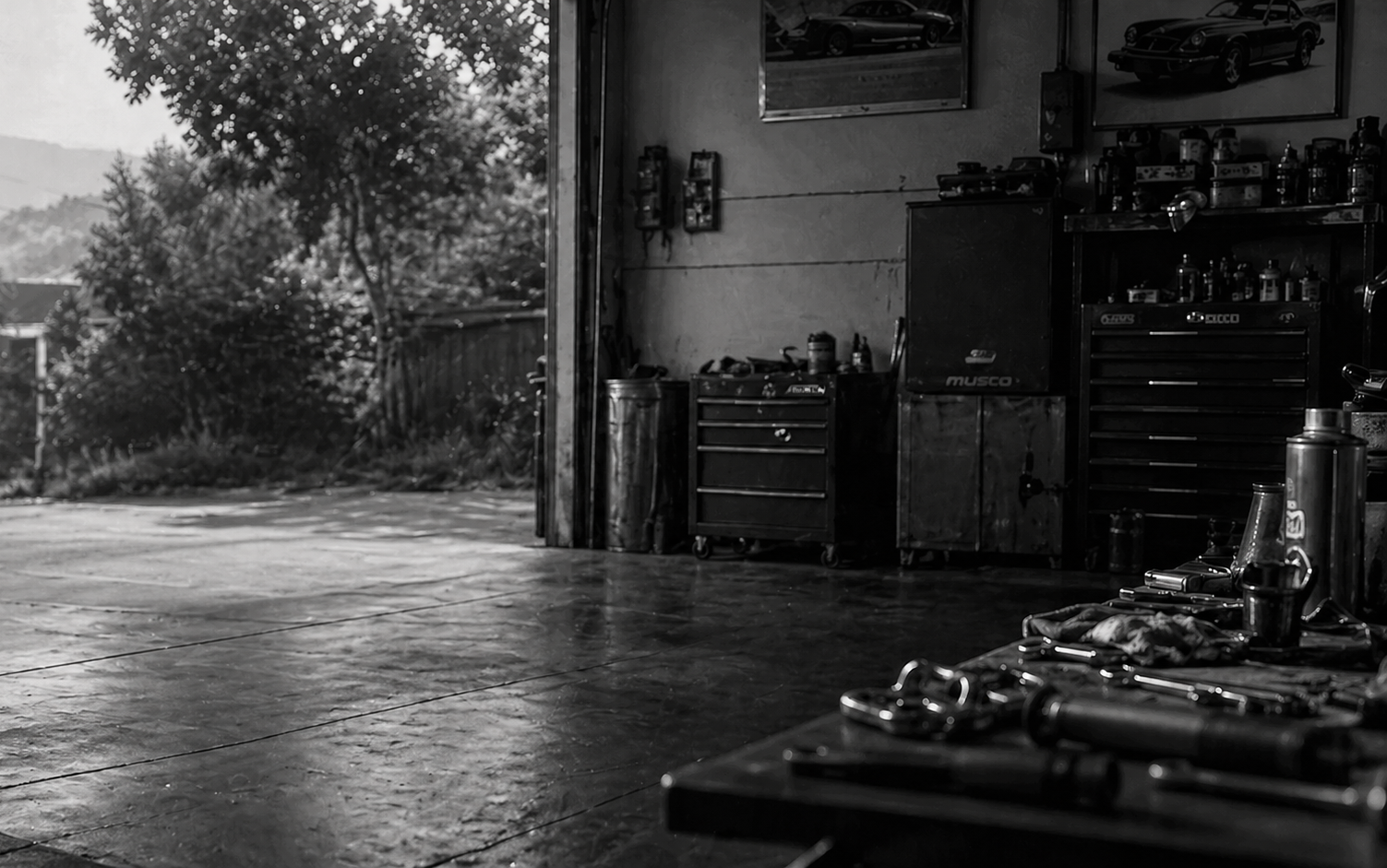
He drove his rental car to Miguel’s, a mechanic he considered an innovative genius. He needed an innovative genius because there were too many rip gangs and Sinaloa cartel goons south of the border.
Miguel was putting some finishing touches on Redding’s midnight-blue Dodge Durango—a big three-row SUV—when Redding pulled into the open courtyard. He got out of the rental and shook hands. Miguel, a slim, light-skinned man with close-cropped hair and a mustache, greeted Redding.
“¿Cómo estás?” Good to see you, ese. My favorite customer.”
“Hey, Miguel, what’s up? How’s the family?” Redding asked, with his non-smiling resting face.
“Except for the wife and all the kids, just fine,” he said, grinning.
“Tell me about it. Looks like you’re about done, right on time.”
“Check it out, man.” Miguel pointed to a patch of lens-film tape on the passenger door. “Jus’ enough to hide your little friend.”
“Ho! Looks perfect.”
There were larger blue patches on the right front bumper that were made to look like they were covering a crack, but there was nothing wrong with the bumper, and there was a smaller patch on the rear fender. They were there to make the one on the front door less conspicuous. The Durango looked too glossy and new to have dings and scratches on it, but a hundred miles of desert driving would turn it into a dust bucket.
“And another surprise for you, ese. I built one on the driver’s door too. No charge except for the extra piece. You don’t mind, my friend, do you?”
“I don’t mind. They’re about two-hundred eighty apiece, right? No problem. I should have thought of it myself. I just thought my Glock would do.”
“You can never have too much backup. And yes, they’re two-eighty-two including tax. Take a look inside.” Miguel opened the passenger door. “Here you see I made a section of the door panel that you can just snap off from the plastic tabs. I had to remove a small part of the moisture barrier so you can reload.”
A cubby hole in the door held a Bond Arms Roughneck double-barreled derringer, small enough to fit in a woman’s palm and supporting .357 magnum rounds. The barrels pointed outward through the camouflaged hole in the door. Thin steel wires extended from the hammer and the trigger, out a hole at the bottom of the original door panel and running under the carpet and into the center console, where Miguel had installed two buttons side by side, one for each door.
“Loaded already?” Redding asked.
“Si, loaded, my friend, ready to go. I put a box of ammo in the glove compartment. And the wires are spring-loaded in the right places, you know what I mean? So all you gotta do is push the buttons, jus’ like a radio button, and you don’t need to use no force. As you know, these things are single action, so you have to push the button twice. First to pull the hammer back and second to pull the trigger. Two seconds, amigo.”
“Well done, man.”
“And when you’ve shot one barrel, jus’ push the button twice again to fire the second one. Jus’ remember not to drive around with the hammer cocked with a bullet still in the chamber. You know. Because it’s out of sight, out of mind when you’re just riding around.”
“I’ve always said you’re a genius.”
“If you say so, John. So, this part of the door panel is easy to pop in and out, so you can reload when you have time. You probably won’t have time, though, ese. Hey, you like your new bumper guard? Fortified police-style. With your four-wheel drive and 475 horsepower you can plow through half the cartel.”
“Let’s hope I don’t have to. All I want is to earn an honest living like a cross-border Uber.”
“Ha ha ha! That’s funny, my friend. You’re a funny guy. An honest living!”
“At least my customers are Chinese. There may be a mechanic here and there, but they won’t be competing with you in Las Cruces. They all want to head to LA or New York.”
“Always the same with those guys, eh?”
“They don’t know any better, but they want to live in a big city where lots of other Chinese live. So they can plug into a network. They want their authentic Chinese food, too, which means forget about New Mexico. Except to cross.”
Miguel had one of his mechanics follow Redding to drop off the rental and drive him back. Redding paid him three thousand for the bumper guard, modified door panels and the two derringers, said goodbye and drove away. He stopped at a coffee drive-through for a mocha. Then he hit I-10 south, crossing into Mexico at El Paso and on to Chihuahua City on Mexico’s four-lane Federal Highway 45 through the shrub desert. It was July and a hundred and ten degrees and he was glad to have cooled seats for the four-hour drive.
* * *
He always admired the spacious streets in Chihuahua, lacking high-rises—a good thing—and a little starved for greenery, but very clean. The city’s central zone was off limits to cars and was a pleasant place with spacious town squares and the much-admired, double-spired Metropolitan Cathedral. Chihuahua City was also dangerous, one of the worst in Mexico, located along major drug trafficking routes.
He went to see his migrant-fixer Emiliano at his apartment, a man he’d done business with multiple times. Emiliano offered Redding some much-appreciated espresso. Emiliano was a stout man with thick curly hair and a four-day stubble and soft-spoken voice. He was good-natured and hospitable, not like some sinister character in a movie about traffickers. He arranged transportation and consulted with Chinese migrants for a fee but he did not drive anymore.
“As you know, I don’t bother going north from here. There’s no going through El Paso, and the New Mexico border is too dangerous. So I leave the driving to you, amigo. Like Greyhound.”
“Tell me about my passengers this time.”
“Six adults, three men and three women. They flew in direct from Quito. Apparently they knew just who and how to bribe for a Mexican visa. There are two young couples, twenties and thirties, and the older couple is Christian and they have a thirteen-year-old girl. Another man is a sour and round-faced single guy, and the oldest is a plump and very quiet and expressionless granny about sixty-five, traveling on her own. Her face is so common and expressionless, it’s like she’s not there. But she has family in Chicago.”
“How long have they been here?”
“Three days. They are anxious to get on with it.”
“Okay, I can work with that.”
“You know the Chinese are a, let’s say, complicated bunch. This one couple I heard about, not yours, actually went on foot through the Darien Gap. In Necocli the wife was so stubborn about buying instant noodles.”
“Oh yes, Chinese and their food! The instant noodle fight happens all the time. The husband says what are we going to do with instant noodles in a jungle that takes us seven days to cross? She says okay, buy a little stove. Finally the wife cooks their own beef jerky, like store-bought wouldn’t be good enough for them. Yeah, the fresh food obsession. Probably trying to save money too.”
“Yes, maybe they should hunt monkeys and snakes too, ha ha.”
Redding managed to smile. “Yeah, they’d be fresh enough.”
“But I tell you something, ese. Not all the Chinese migrants are angels. I’m talking about the single men, even some married ones. A few are predators, did you know that? And some of the single females need protection. So they talk to the fixers and smugglers and offer sexual favors and a little money in exchange for protection. Well, we give it to them and yes, well, if the females are attractive enough.”
“No judgments from me, amigo,” Redding said, though the irony was not lost on him. “Where’s my group now? Are they doing all right? Nobody sick or anything?”
“Oh, yeah. They are fine. They flew together from Quito to bypass the entire Darien Gap and Mexican land-transit bullshit. You know, fourteen or fifteen checkpoints along the way, crooked bus drivers and so on. These Chinese in your load mostly have some money, unlike the poor slobs from Guatemala and or El Salvador who walk all the way.”
* * *
Redding met his migrants down the street at an apartment Emiliano rented.
“Hi everyone. I’m your driver. My name is John Redding.”
They greeted him warmly except for the sullen-looking single man, whose name was Chen, and exchanged introductions. The whole flat was thick with the smell of food and it smelled good to Redding. They gave him a late lunch of chicken and rice and home-made dumplings and talked while they ate. Redding asked them all what had brought them here.
A man of about thirty-five who called himself James said they all spoke English except the granny and their daughter and the sullen man named Chen.
“We are Christian and all I want to do is feel the freedom to worship how I want and to say whatever I want.” James was normally a cheerful man, with thick glasses and big, white, crooked teeth and was always ready to laugh and smile except when he got emotional about how China had treated him and his family.
“In the U.S., you can do whatever you want and say whatever you want as long as you don’t hurt others. I want to experience that feeling.” He choked back his tears.
“Ah-ah,” said his wife, Jess, in agreement. Their thirteen-year-old girl grinned. Granny sat quietly and passively.
“How about you?” Redding asked the other couple, two twenty-somethings, the woman quite attractive. They spoke good English.
“After Covid I was no longer able to make a living,” the young man known as Ernest said. Why would I come otherwise?”
“That’s right,” his wife Christine said.
“Now there’s no hope. If you are poor, you stay poor.”
Chen the sullen man spoke in Mandarin and then Ernest translated.
“Chen said honestly, he was just following everybody else. Online he saw many people making the trip.”
“Many people leaving China. Our town is almost empty,” Jess said.
“Yeah, but only the brave ones leave China,” said her husband James.
“In the current environment,” Ernest continued translating for Chen, “it doesn’t matter how smart or hardworking you are. You rent a place for business, take out loans to do business, you just wind up worse off. You want to work for a salary? If you work, you have money problems and mental problems. He said you’re better off just lying flat, then you only have money problems. He worked hard for twenty years and all he has are debts.”
“Why did you choose the United States?” Redding asked.
“Because it’s the only country that doesn’t deport us,” Ernest said.
“For my husband and me it’s the freedom,” Jess said.
“But they do deport you now. And without delay. There’s no more asylum.”
“Hah? What?” The migrants started shouting over each other in Mandarin.
“Yes. The YouTube documentary from last year, have you seen it? It was in three parts and it was very good.”
“Yes, we have all seen that one. With the sexy Chinese CNA journalist from Chongqing,” Ernest said.
“Aiyoh, you buffoon,” his wife shot back in Mandarin. “Who says she’s sexy? You and who else?”
“But the law has changed now,” Redding said, “and you certainly can’t believe anything you see on TikTok. They’re all a bunch of twenty-year-old idiots. There is basically no more asylum for anyone.”
“Oh, my God,” James said while others were still jabbering.
“Don’t worry. There is one exception. That’s why I’m here. I would not come here and take your money if you just had to run and hide in America without any hope of asylum or work. That’s not how I do business. Not many people know about the exception, so I want you to keep it to yourselves. It’s a secret, okay? And listen carefully.”
“Oh, ah, what, what?” Everyone was talking loudly all at once again.
“You have to show that you have published something criticizing China. Not online. There are all kinds of fakes and trolls on the internet and the U.S. Government doesn’t accept it. No, you need to have something in print, with your name on the article. So after I get you over the border, you go to Albuquerque. Albuquerque is in the middle of New Mexico, about a three-hour drive. A bit longer by bus. I’m taking you to Las Cruces, in the south of the state, and from there you can catch a bus to Albuquerque. Later I will give you a name and address in Albuquerque where you can go see a lady. She prints a small Chinese newspaper. It looks like a regular newspaper, but really it’s a propaganda sheet. You write an article with your name on it criticizing your home country strongly. You really blast China. Then you pay the lady $200 or $300 to print it. Now you can take your copy and show it to U.S. Immigration and say ‘See? The CCP will put me in prison for the rest of my life or kill me if I go back.’”
“Yes, we know,” Ernest said. “We are sure the CCP will see the articles. They don’t have to be published in China. Snitches from China are always reporting back from foreign countries. This is technically required by law in China since 2017. For companies and regular people. The CCP will not forget you if you criticize.”
“That’s right,” James said. “Everybody knows that.”
“The good news is,” Redding said, “when your article is printed, you can apply for asylum. Just make sure the lady prints each of your articles on different days. At least a few days apart. You don’t want all your articles printed in the same edition. That would be stupid.”
“Ah, hoah hoah hoah. Now I understand,” James said. “That is the only way to asylum?”
“It’s the only way to apply for asylum. And after you’ve applied, you can get a work permit while you’re waiting.”
James translated for Chen the sullen man and the deadpan, round-faced granny.
“Okay,” James said, “so no matter how long it takes to get asylum and a green card, we can still work, right?”
“Correct.”
“Is it dangerous from here to New Mexico?” asked Jess.
“Near the border it is dangerous. There are border bandits and also Sinaloa cartel guys. That is why I am charging you three thousand dollars per person. Some smugglers would charge more if it’s more dangerous, but I am not greedy and I do not think it’s fair to charge you more. Nobody forces me to do this job.”
“How do you know we can get through there?” Jess said.
“Because I’m a crazy American and I have a gun.”
The migrants did not think it was very funny and were silent and glum-looking.
Finally, Ernest said, “I think that’s what we need.”
“God will protect us,” James said.
“Don’t worry too much. I have done this a few times before without much trouble. If I thought I would be killed, I would not do this work.”
* * *
Redding stayed over at Emiliano’s place. He wanted to get going by 9 am. But vacant-faced Granny didn’t feel well, and the sullen man had been arguing with Ernest, something about women. Granny felt better later and wanted to buy instant noodles but everyone told her not to worry, it wasn’t that far, and everybody had sandwiches and water. It was almost 5 pm now, but Redding insisted on leaving. He did not have the time or inclination to spend another day in Chihuahua, so by they piled into the car. They heard plenty of gunshots on the way out. That was normal for Chihuahua. The migrants had heard the sounds every day and they rode silently. The seven passengers shared the second and third rows. Redding thought it was too dangerous to have a civilian up front, and he wanted to have a good look and a clean shot, if needed, at anyone peering inside.
* * *
The two-lane Federal Highway10 traversed flat, shrub desert as far as the eye could see. It was largely deserted and the going was uneventful as they drove northwest until about an hour into the trip when suddenly there was a lot of shouting and screaming in the third row between Chen, Ernest, and his wife Christine. It was a real melee so Redding pulled over.
“All right, settle down! What’s going on?”
The fighting continued. “Shut the fuck up!” Redding said, and finally they grew silent. “I said what’s going on? This trip is going to be enough trouble without you three fighting.”
“Chen was talking about my wife’s sexy body,” Ernest said, “and I scolded him and he tried to punch me in the nose. Then he tried to touch my wife.”
“That’s right,” Christine said. “This man is a pig and a big bully. Talking about my boobs all the time and tried to touch me many times. I can’t stand him anymore.”
Redding got out of the car and opened the left rear passenger door and pulled Chen out of the car by his neck and struck him on the side of the head with his Glock, sending him sprawling to the pavement. Redding counted out ten hundred-dollar bills from his wallet and stuffed them in Chen’s shirt pocket. Then he opened the trunk lid and tossed him his backpack.
“Take this, cabrón, and fuck off back to Chihuahua.”
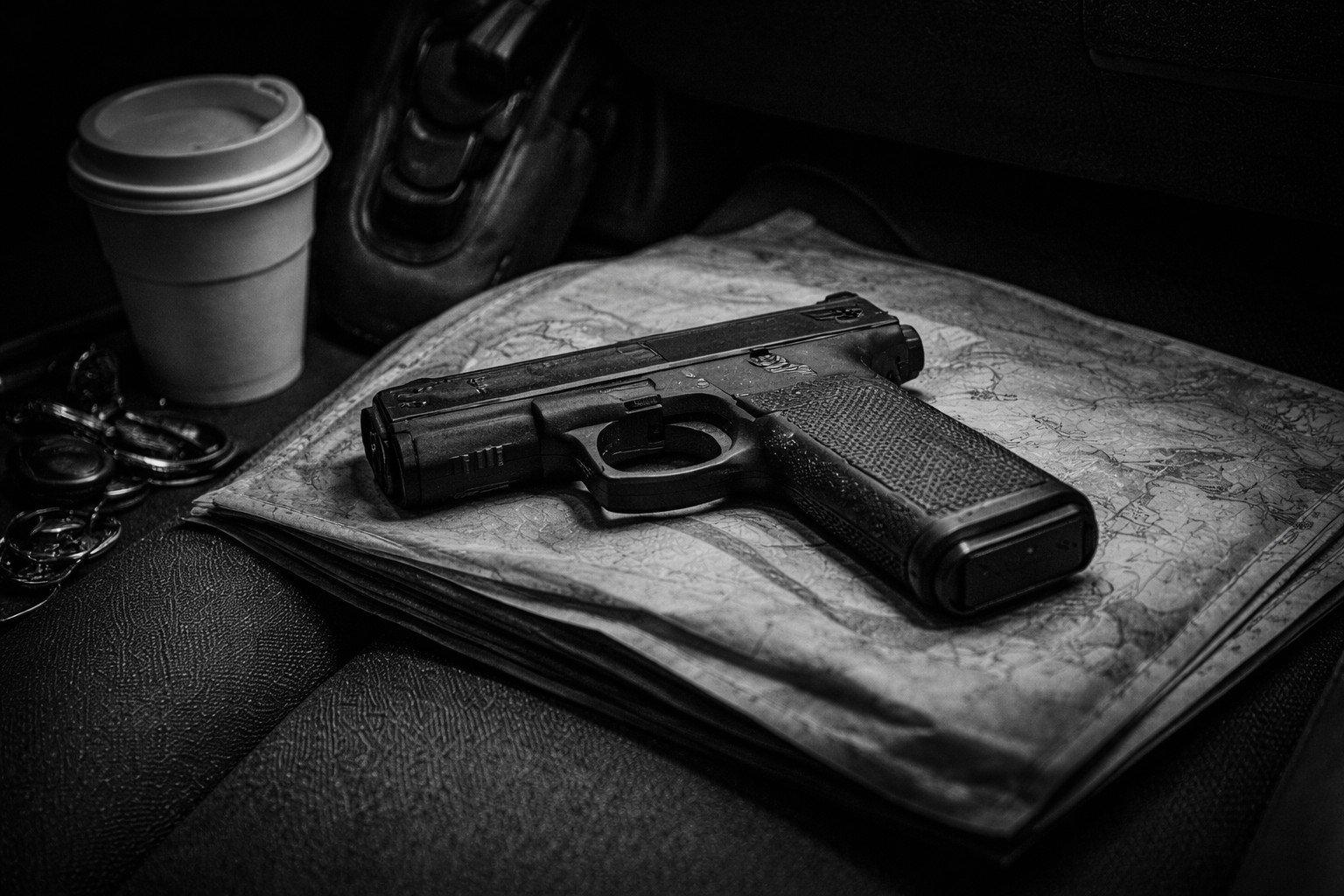
He got back into the car, placing the Glock under a cloth on the passenger seat where he always kept it when he drove in Mexico. He gave Christine and Ernest $500 each. “That’s for compensation with my apologies. There’s no harassment of women in my car and no fighting. Jeez, I didn’t like that guy from the get-go.” Then the blue Durango drove off.
After a little while, blue and red flashing lights loomed a few hundred yards ahead after Redding had turned northeast on Route 2. It was dusk now.
“Who’s that, ah?” somebody said.
“What’s this, a checkpoint?” James said.
“Yes, municipal police. They operate in the desert because Mexican municipalities are incorporated for many miles outside the town or village. They’ll want about twenty dollars each. Don’t worry, it’s included in your fees. If they want something crazy like a hundred dollars each, you will have to give me the difference.”
An officer waved a luminous night stick and Redding stopped. There were two of them, but only the one with the night stick approached. He came to the passenger side and peered inside with a flashlight, lighting up everyone’s face one by one.
“Buenos nochas, señor,” the policeman said.
“Buenos nochas.”
“What brings you here tonight? Migrants?”
“Yes, I’m taking them to New Mexico. I’m retired DEA. Here—I’m going to open my console to show you the retirement badge with ID.” He opened the console slowly and handed the badge to the officer.
The officer frowned and studied it officiously. “Ah, Deeah. Okay, señor. Standard tax on this road, thirty dollars per person these days. Inflation, you know. But for you I make it twenty.”
“No problem.” He reached into his shirt pocket and counted out a hundred forty dollars. “There you go, oficial. I’m the Deeah driver so I go free. We good?”
“Si. Is okay.” He handed the badge back to Redding. “Safe trip, and be careful. There are other people not so friendly like me.”
“Gracias, oficial.” The officer waved them through.
* * *
Highway 2 was less friendly just as the officer had said. About fifteen miles farther east a roadblock appeared, two Hilux pickups parked head-to-head. Redding could see they were Sinaloas. They had that look and swagger, and besides, they liked Hilux trucks. The Durango could have easily smashed right through them and outrun them, but that was inadvisable, as the cartel men carried assault rifles.
Redding turned around to speak to the passengers. “No matter what happens, stay quiet and don’t panic. James and Jess, if your little girl is the screaming type, put your hand over her mouth. Understand?”
The adults looked scared, but they nodded. “No worries, Mr. John,” said James. My daughter is the silent type when she is afraid.”
Two slovenly men approached, one on each side of the Durango. Redding rolled his windows down.
“Who the fuck are you, cabrón?” the one on the passenger side said.
“Just passing through, my friend. I don’t have any drugs. You can search my car if you like. Just some Chinese visitors.”
“Chinese visitors? You think we are idiotas? You’re a smuggler, ese. We don’t allow no outside smugglers around here, especially stupid-looking gringos like you. Your friends in the back belong to us now.”
“Look, I’m ex-DEA. I still have friends in El Paso because I just retired a few months ago. Anything happens to me, you’ll have DEA all over your ass all the way down to Mexico City.”
“Bullshit, cabrón.”
The driver-side thug said nothing while he pointed his weapon at Redding’s head.
“Okay, I’m going to reach slowly down to my console to open it and show you my retirement badge and ID. Like I said, you don’t want to fuck with the Deeah.”
The passenger-side thug thought this was hilarious and laughed loudly.
“Badges? We don’t need to see no fucking badges.”
He told the other goon in Spanish that the gringo had a nice car, so why don’t we just kill him and take the car and the Chinks. Drag the gringo out first so we don’t bloody up the interior. The driver’s-side man’s eyes lit up. Redding understood that part and saw that he had a bit of luck that night. Both of them were standing in the right place, and the driver-side guy had lowered his rifle a bit while the other one was talking murder and migrant-kidnapping. Redding’s right hand was now near the console. He pushed both buttons twice. The derringers blasted their .357 rounds, making bangs that were muffled by the door panels but still sounded like balloons popping. The bullets knocked both men back. The one on the right was off-balance and firing his AR-15 into the air. Redding let loose the second barrel and dropped him. The second shot missed the one on the driver’s side; he had moved a bit and looked shocked with disbelief from the first round that had pierced his gut. Redding shot him in the head with the Glock and left him there. The women screamed and the girl cried; Redding told them to be quiet because they were making him nervous and the trip wasn’t over yet.
“I’m sorry,” he said, “but remember when they were talking Spanish? They were going to kill me and sell you into the sex trade. They said so. It was them or us.”
He drove on eastward for about five minutes until he saw a cloud of dust moving fast from the north, near New Mexico. Must be more cartel friends. There were probably two or three of them in the vehicle. He resisted announcing the “We’ve got company” cliché, and this time he had no tricks up his sleeve and there were no rock outcrops where they could take cover. Just flat scrub desert to the horizons. But on the south side he saw a small, abandoned concrete cottage, just walls left of it and no roof. There were two open doorways, one on the right, north side, and another facing east, on the left side of the east wall.
“Everybody out! We have to take cover in that building.”
The migrants were frantic and wasted no time. Redding and Ernest helped granny move.
The Sinaloas’ Hilux ground to a stop a hundred yards or so away and three men got out and split up so that they were about fifty feet from each other. They were crouching and had their assault rifles ready. They knew that whoever was inside the ruin, only one was dangerous, the one who had killed two of their compadres. They’d also seen the rest of them, the helpless civilians, through binoculars.
As they drew nearer, they closed ranks again, to the right of the open east door. They wore dark clothes but thanks to a three-quarter moon—more luck—Redding could see them. He lay on his belly and stuffed ear plugs into his ears. He motioned to the others to lie flat and cover their ears. He could make out all three of them as they edged into view. He couldn’t believe these guys were not surrounding the building. Instead they came at the east door, rifles ready. Presently he saw them lined up at the edge of the opening like three overlapping cacti. He rolled to his left and emptied his Glock into all three of them and they screeched and yelped and dropped. There was blood spraying from one of them who had taken a bullet to the throat.
“All right. Let’s go. Get in the car, now!” he said.
Redding gunned the Durango and it roared into action, continuing east on Highway 2. He suspected he had killed the last of the Sinaloa in this area tonight. He drove east another forty miles at ninety miles an hour and turned left at the continuation of Highway 2, due north. That road went to the border and then turned east again. Redding kept on it for five miles until he reached the opposite side of Sunland Park, which was adjacent to Texas and El Paso.
“Okay, we’re here. Now listen. Be as quick as you can climbing that fence. It’s not very high and not very hard to climb. It’s just what we call chain-link. And it’s dark here, which is good. Like I say, be quick. The Border Patrol has all kinds of patrols and sensors. When you get to the other side you’ll see a lot of trailers. I want you to lie flat in the grass about fifty meters before you get to the first trailer. Lie flat in the grass, got it? I don’t want those trailer people seeing you. I’m going to drive through the El Paso crossing nearby and then I’ll swing around and pick you up. Understand?”
“Yes, we got it. No problem,” they said.
“All right. Everybody out. Fast and quiet and lie flat in the grass, right?”
“Okay, Mr. John, we got it.”
“Go!”
Granny was unable to climb the fence. Fuck me, Redding said to himself, then remembered he had a bolt cutter in the back of his truck. He ran to the fence and cut a low, four-by-four hole in it and helped her through. Everyone else had scrambled over the fence. Then Redding walked back to his car and patched up the two derringer holes before driving on to the El Paso crossing.
* * *
“What was the purpose of your trip to Mexico?” the ICE agent asked.
“Just visiting friends in Chihuahua.”
“You got out alive, too.”
“Anything for a good woman, right?” Redding grinned.
“Welcome back,” the officer said, returning the passport.
It took Redding half an hour to get to the end of the trailer park. He flashed his lights and then just left his parking lights on. He could see his customers crouching in the grass; then they ran to the Durango as fast as they could, which was not very fast with backpacks and granny along, but they made it into the car. Redding turned the Durango around and took off.
* * *
When they arrived in Las Cruces he dropped them off at a Chinese B&B, whose owner knew him, and gave all the adults a card with the address of the newspaper lady in Albuquerque.
After two or three more runs like this, he was bound for Thailand. The women were beautiful and he could find a respectable one in her forties or even late thirties, and he could live off Social Security comfortably and invest his pension in ETFs. And nobody in Thailand except clueless tourists cares about age differences. Fuck our American puritanism, he thought.
The migrants got out of the car one more time. He wished them all good luck and hugged granny and the kid and shook hands with the others.
“Welcome to the U.S.A.,” he said.