In this episode of Call to the Editor, Sofia Topi, Nonfiction Editor at The Brussels Review, speaks with Burcu Seyben, whose creative nonfiction piece “Private Lessons” appears in the Winter 2025 issue. Seyben reflects on memory, displacement, and motherhood, drawing connections between her teenage years in Türkiye, her family’s forced relocations, and her present life in the United States. The conversation explores personal history and political context, education and cultural production, artistic responsibility, and the discipline required to sustain a writing practice across multiple professional and personal roles.
Sophia Topi: Welcome to another episode of Call to the Editor podcast for The Brussels Review, supported by the ACC, the Art and Creativity Consortium. My name is Sophia Topi. I am the nonfiction editor at The Brussels Review, and I am here joined by Burcu Seyben, one of our writers in the latest Winter 2025 issue, which you can find at shop.thebrusselsreview.com. Go check it out. We have a discount code: type “calltotheeditor,” no spaces, for twenty-five percent off, valid until the end of January. Hi, thank you for joining me. How are you today?
Burcu Seyben: I am good, thank you.
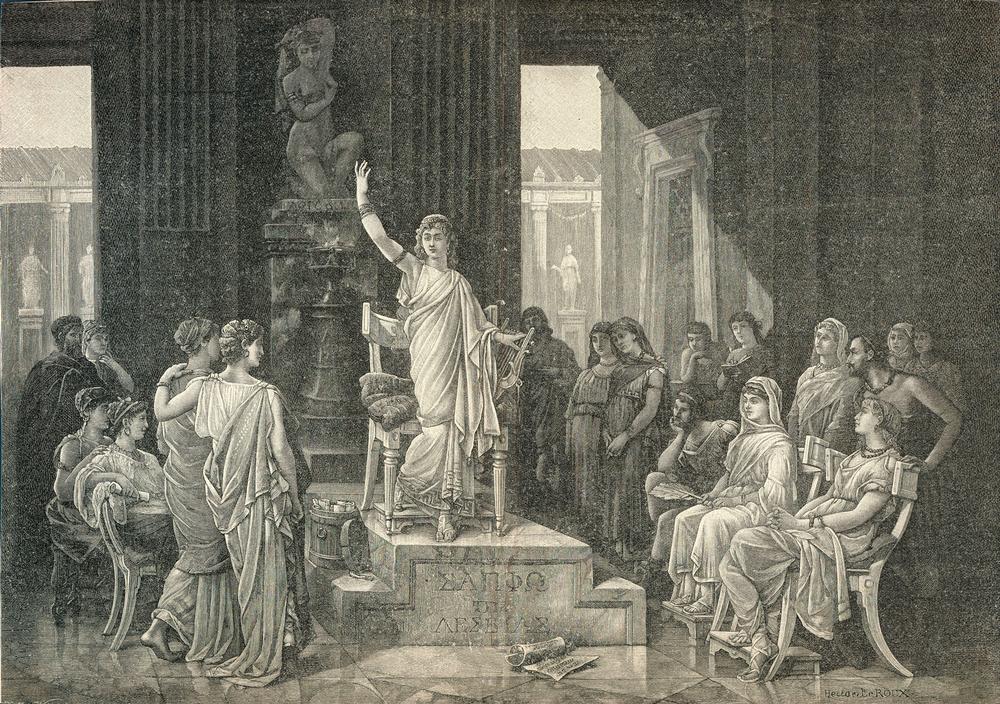
Sophia Topi: We have this massive time difference. We cannot see it, but we know it is there. I have a number of questions for you, and I realized just before entering this conversation that some of them might be challenging, so feel free to stop me or respond only to what you want. If you do not mind, I would like to start by giving a short overview of the story we are publishing together, “Private Lessons.” This is a story that takes us to your teenage years and into the classroom of your private tutor in your house. You wrote it partly as if it is that adolescent person who is writing, as if you are reviving your memories from back then. I am wondering whether, by doing this, you see yourself as someone conversing with that teenage girl, or whether you are really going back to those times. Is it you realizing that even back then you understood it as a formative experience?
Burcu Seyben: That is an excellent question, Sophia. Yes, I mostly see myself as a person at this age conversing with a younger self. One of the reasons is that the political context behind this story is very similar to the political context that I have lived through recently in my life. The political context behind the story was that my parents had to leave the capital city of Turkey, Ankara, because of the coup d’état and start living in a very small town. My mom especially was not very happy living in that town and made sure that we had a way out of it. A decade ago, I had to go through a similar experience with my immediate family, with my son and my husband, where I also had to leave Turkey and come live in this small town in Idaho. I started going through the same feelings my mom was going through at the time when I was that age. I began asking myself why I ended up here, what was going on, and what was going to happen with my son, and I started thinking that maybe I was pushing him in ways my mom was pushing me when I was living in Turkey. So it is a conversation with a former self, but maybe it is also a conversation with my son. That is the background for this story.
Sophia Topi: That aligns very well with extra thoughts I had around your piece, mostly about how swiftly and deftly you were able to combine very complex concepts such as memory as a variable factor and motherhood as an authoritative voice. I hear you speaking about it already, so perhaps it is worth staying with this concept a bit longer. I am wondering whether you were able to have these lucid observations because you are now a mother, or whether it is through the writing process that you were able to observe the situation in this way.
Burcu Seyben: It is both. The memory is so alive because I want to hold on to that memory. It is almost like a reaffirmation of identity: who I was, what I have become as a person and as a mother, and who my child is becoming. As a mother, I am experiencing these feelings that go in and out. That part of my life is what I have been writing about a lot, and I feel like it has a lot to do with who I have become. I am also aiding somebody else to become a person right now. What is my responsibility as a mother? What is my responsibility as a parent? And maybe I should not have that much responsibility. There are all these internal conflicts about how much of us is what our parents dreamed us to be as individuals, and how much of it is just us. It is almost like we are living a double life as children and as parents at the same time. There is always this complex questioning between who we are and who we want our children to be.
Sophia Topi: It is very interesting hearing you speak about this. I do think that in your case this extends beyond writing, because you are also an educator and a theatre director, beyond being a writer and a mother. You have all these responsibilities. I am happy to hear you being so eager to guide people. I wonder, since you are navigating all these roles, how you think they inform and update each other. And if you want, since our audience is mostly writers, I would like to focus on your responsibility as a writer. How do you think your perception is updated by the different roles you have in life, as a mother, an educator, and a theatre director?
Burcu Seyben: Wow, that is a very difficult question. I do not know whether I will be able to answer it fully, but what always happens to me with all of this is images. I have these vivid images that trouble me all the time. When I say images, I mean snapshots, instances, or even photographs of the past, the present, and of being in the world. I have to commit to one image at a time, and that is what informs my writing. I am realizing that I have these instances or images that make sense to me, and I hope they make sense to other people too. How do I weave those images together? What is most important? It is never one linear thing for me. If I had to go through things linearly, it would not be possible. It is not possible for me to go from mother in the morning to theatre director to writer in a neat sequence. All of those things have to be juxtaposed for me to be able to do them. That is what informs how I write. It is never one continuous thing with a clear beginning, middle, and end. It is all these patches and photographs of being that I put together to make an album. Even if that makes it fragmented, it is still powerful and valid.
Sophia Topi: It is very nice to hear someone speak about blending roles together and continuously updating themselves. I do wonder, though, considering that a central figure in your piece is your former teacher, and considering all these roles you occupy, whether you could speak about the importance of formal education when it comes to cultural production. If you want, you can think of this through the specific context of Turkey or the specific area you are now in, in the United States.
Burcu Seyben: That is a great question. In Turkey, unfortunately, formal education was not enough for a lot of families. In order to accomplish their dreams, which were often very ambitious, people felt they needed private education. Public schools were not at the same level as private schools. That meant that from a very early age we needed private tutors. My mom was very aware of this, even though I was not at the time. She was coming from Ankara, the capital city, and she had a strong sense of the difference between big cities and small towns, and the educational gap between them. Every parent, to a certain degree, had to push their children toward private education to prepare for better schools. In my case, that meant traveling every weekend to see a tutor who lived far from the town we were in. That might sound extreme, but everyone experienced some version of this. It is different in the United States. Here, the difference between public and private schools is not as apparent. Most people send their children to public schools, which I appreciate because I did not have that experience. Everyone receives a similar education in public schools, and there is a sense of equal opportunity. After that, what people do is up to them. But those formative years are much more accessible here. That said, there are still things to criticize. For example, there are gaps in exposure to music, theatre, and the arts. As a parent, I now feel responsible for filling those gaps for my child and creating that cultural environment.
Sophia Topi: Some of our readers are writers with long careers behind them, and others are just beginning. As someone who has been writing extensively, do you have any advice for them?
Burcu Seyben: That is an excellent question. I think the most important thing about writing is persistence. Writing is not what I make money from. It is my passion, my love, my art. I have to create every kind of environment to serve that art. I tell my students the same thing. Whatever you are passionate about, reserve a little time each day that belongs only to that passion. It does not have to be much. It can be fifteen minutes or half an hour. For me, it is five in the morning. If I do not do it, I feel like a part of me is missing. Over time, it builds up. You do not feel defeated because you did not accomplish something in one sitting. My second piece of advice is to kick perfectionism out of the picture. It will never be perfect. It will never be exactly what you imagined. But if you allow it, it will surprise you in ways you did not expect.
Sophia Topi: Is there anything you are working on these days?
Burcu Seyben: I am working on three different projects. I am working on creative nonfiction, which I had not done before. I was more of an academic writer and a playwright before coming to the United States, but I took an amazing community college creative writing course and decided to pursue creative nonfiction. I am working on three collections of essays. One has to do with “Private Lessons” and flashbacks to womanhood, girlhood, and motherhood. Another focuses on exile and living in the United States, which is very different from my life in Turkey. The third is almost like a novella about our escape from Turkey and the year leading up to it.
Sophia Topi: Thank you so much for this conversation and for trusting your piece with us. I would also like to thank our supporter, the ACC, the Art and Creativity Consortium, which supports the publication of The Brussels Review and its wider cultural initiatives across Europe. If you are a writer, a creator, a small publisher, or an organization dedicated to supporting the arts, you can connect with them by visiting artcrecon.org to learn more and become part of the cultural network. Visit The Brussels Review website as well to grab our issues, and do not forget to use the code “calltotheeditor,” no spaces, to get twenty-five percent off the latest issue, valid until January. Thank you for sticking around.