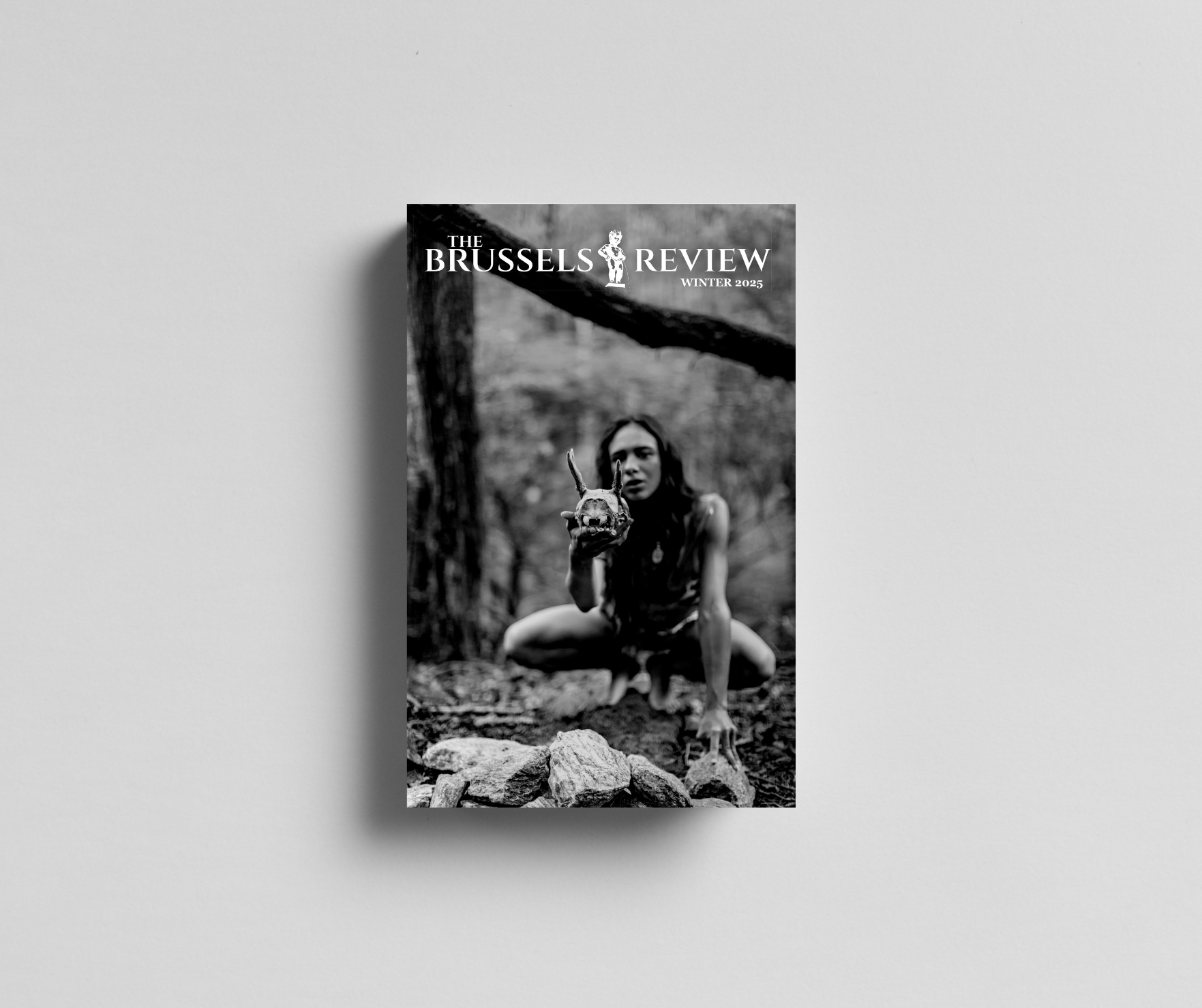
In this episode of Call to the Editor, fiction editor Filippo Beltrami speaks with Lydia Renfro about her short story Greetings From, featured in The Brussels Review Winter 2025 issue. The conversation explores Renfro’s literary formation, her time living in Turkey, and how place, food, language, and cultural displacement inform her writing. The discussion expands into literature’s role in a globalized world, the importance of walking and landscape in creative practice, cross-disciplinary artistic influences, and Renfro’s current and forthcoming projects in fiction and poetry.
Lydia Renfro holds an MFA from Adelphi University and is the recipient of the Donald Everett Axinn Award for Fiction. She works primarily in short fiction and poetry, with a strong focus on place-based narratives and interior experience. She currently lives in the United States. More of her work can be found at lydiarenfro.com.
Filippo Beltrami: Welcome to Call to the Editor. Today’s episode is with me, Filippo Beltrami, fiction editor at The Brussels Review, and is supported by the ACC, the Art and Creativity Consortium, the organization that supports our work at The Brussels Review. If you are a creator, a small press, a publisher, or a printer dedicated to supporting the arts, please find more information at artcrecon.org. Today we are with Lydia Renfro, the author of Greetings From, which will be featured in the TBR Winter 2025 issue, and you can purchase a copy of the issue on our website using the discount code CalltotheEditor, where you can receive 25% off until the end of January. Welcome, Lydia, thank you for being with us.
Lydia Renfro: Thank you for having me.
Filippo Beltrami: Could you tell us a little bit more about yourself, where you are based, what you are doing these days, and of course, what you are reading?
Lydia Renfro: Of course. It is so fun to be talking to you, so thank you again for having me. I am currently in the United States, in Colorado, in the Rocky Mountains. I grew up kind of in Central America, in the prairie lands. I spent some time abroad; I spent time in Turkey, and I spent a little bit of time in New York going to graduate school, and now I am back in Colorado, loving being back. I love it here, so that is sort of where I have been. I primarily work in short fiction and poetry, and I am also working on a novel. What am I reading? I am currently reading The Fraud by Zadie Smith, which is gorgeous and which I am loving so far. I am only about a quarter of the way through. I am also reading The Serviceberry by Robin Wall Kimmerer. It is stunning work. I love her nonfiction; it reads like poetry, but it is gorgeous, instructive, uplifting, and thought-provoking. I always love reading her work.
Filippo Beltrami: Amazing. We will take it as advice to read more about it. Definitely. How did your journey as a writer begin?
Lydia Renfro: Oh my goodness. Well, it may be cliché to say, but I think since I was little, which is maybe common for a lot of folks I know. I was raised in a home where we were readers and storytellers, so from an early age I was making up stories, reading stories, and quite frankly just copying them, making my own versions of what I was reading. I remember my very first story was a notebook page with staples in it about polar bears and high drama. From an early age, I have always loved story. I have been around people who love story. As I grew and developed, and as I was in school, and through the people I was around, it grew into a passion. I started writing seriously, quote unquote, in college. I took several courses that opened my eyes to what the world could be and made the leap from loving reading to realizing I could also contribute my own words. I started writing a lot about place when I was abroad, and then when I went to graduate school, you access writing on the next level. It has been a lifelong companion, but a very slow-developing arc across my life so far.
Filippo Beltrami: I love this journey from childhood till today. Since we are talking about the present, let us talk about your piece for The Brussels Review. You mentioned Turkey, and the Turkish words and references in your piece are amazing. There is also a Turkish character that I love, the guy at the stand with the food, with the simit. If you can tell our readers a little bit more about why you write about Turkey and these Turkish references.
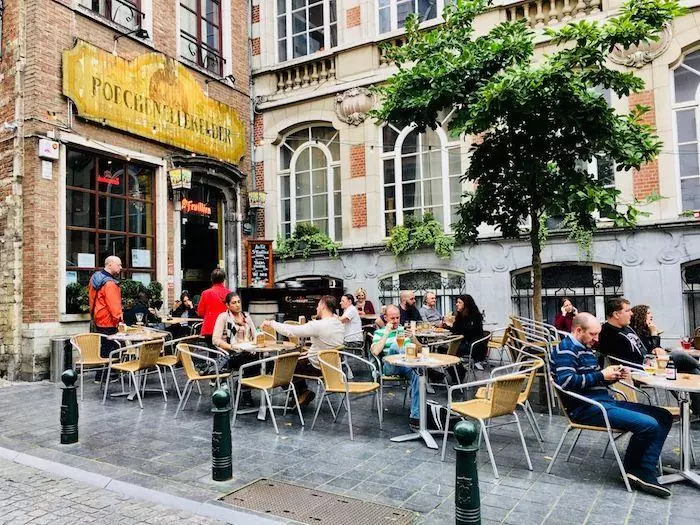
Lydia Renfro: Food unites people. I really think that is true, regardless of who you are or where you come from; we all bond around food. I wrote that story when I was experiencing reverse culture shock after moving back from Turkey to the United States. I had just left, and it was very bittersweet. Those feelings about Istanbul specifically, but Turkey and Turkish people in general, were still bubbling up in me. At the same time, I was in New York, and my MFA cohort had people from all over, and we were bonding over food. These things were still churning in me. We had little prompts in class, and I was thinking a lot about the idea of adventure and about what one person experiences as exotic versus what is ordinary for someone else. I intentionally chose a very common American name and a very common Turkish name to underscore that what one person labels as adventure is just routine for someone else. I also wanted language itself to function as a limitation in the story. I have very basic Turkish, and I wanted that barrier to be present, so the character can access the culture only superficially and remains barred from full community belonging.
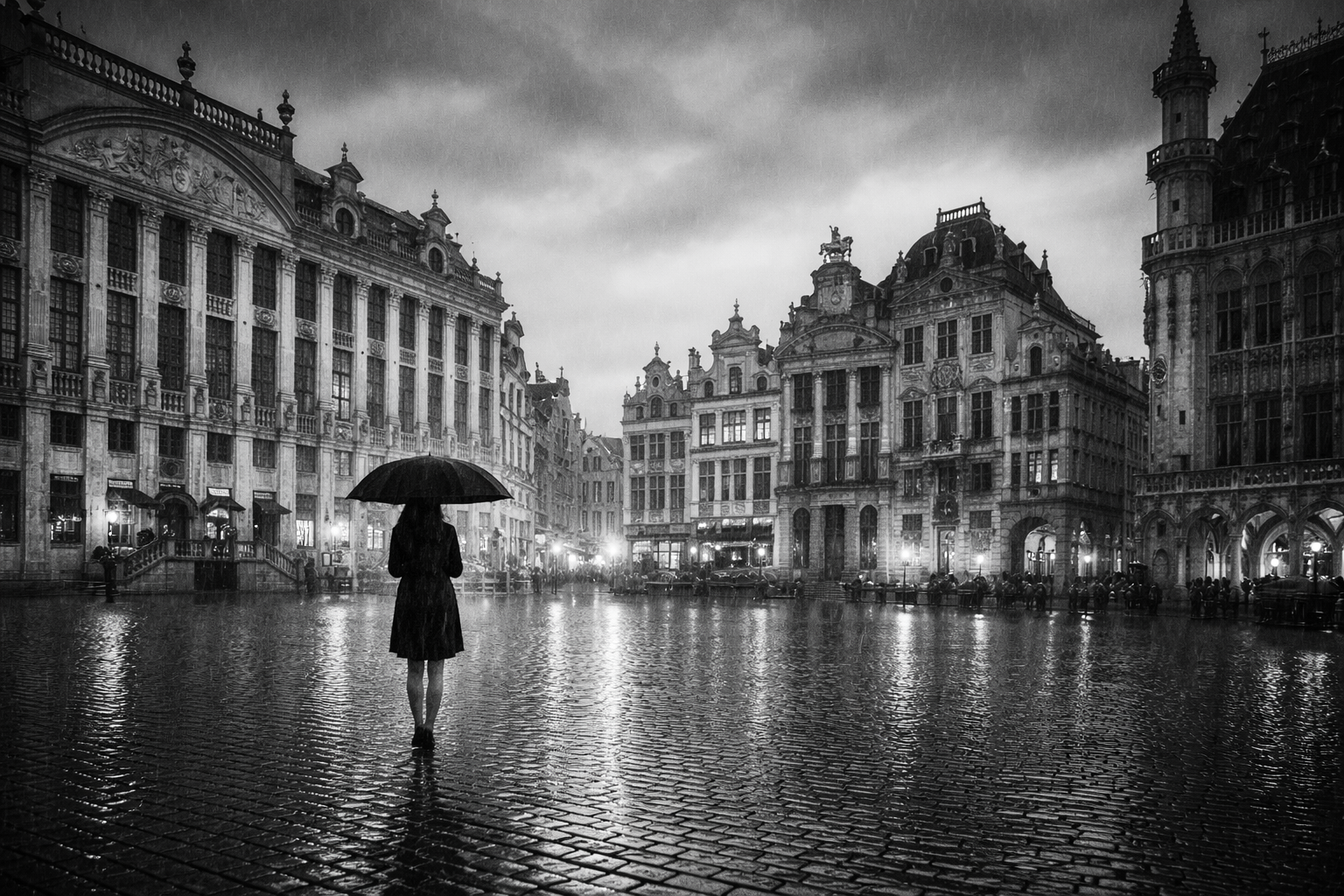
Filippo Beltrami: That is very interesting. In Brussels, we experience every day many cultural connections from people all over the world. If you go to the Grand Place, you hear accents from Turkey, Italy, South America, the United States, Sub-Saharan Africa, Morocco, from everywhere. In this globalized context, where new generations are traveling more and more and living abroad is becoming normal, what do you think is the role of literature? Can literature be a tool to connect people from different cultures and make us more at ease with cultural shock?
Lydia Renfro: I absolutely agree that literature can do that. Story has done that throughout all of human history. It does seem that people are traveling more and that living abroad is becoming more common, and technology makes cultural exchange easier. For me personally, I always wanted to travel, but I came from a family without many means, so I traveled first through books and stories. I love writers who focus on setting. I am a very place-based writer, and stories truly conjure worlds. For instance, Orhan Pamuk’s The Museum of Innocence makes you feel as though you have been to Istanbul. Story moves us past superficial differences and shows how much we share. My experience in Turkey was wonderful and intense. I had just graduated college and wanted adventure. I did not know anyone, did not even have a place to stay when I arrived. I remember standing in the airport, not seeing English signs, thinking, here we go. But it was incredible. The people became friends and family. Istanbul is ancient and layered; history is everywhere. The food, the culture, the texture of daily life stays with you. It did not necessarily change me, but it surfaced things in me that might otherwise never have emerged.
Filippo Beltrami: If we move to another concept of space, do you have a specific place, a safe space, where you like to write and think, something that helps you deal with daily distractions?
Lydia Renfro: I do not have a perfect writing space. I write in the same office where I do my day job. Ideally, I would love a separate writing shed or studio, but that is not my reality right now. However, much of writing does not happen at the desk. A lot of it happens while thinking. I have a dog who loves to walk, and walking has become central to my practice. Being outside shuts off other parts of the brain and allows creativity to flow. I rewrite scenes, rehearse dialogue, and think deeply while walking. Since I love writing about place, especially the American West, being surrounded by that landscape feeds my work. The daily walks have made a significant difference, especially while working on longer projects.
Filippo Beltrami: Talking about inspiration, are there specific writers, musicians, artists, or thinkers who inspire you?
Lydia Renfro: Absolutely. In terms of writers, Orhan Pamuk and Elif Shafak are important to me. I also love Lisa See and Barbara Kingsolver for how they center women and place. I have been reading a lot of Laird Hunt lately. Steinbeck is timeless, and Willa Cather’s sense of place is extraordinary. Musically, I listen to a lot of indie, melancholic music. Noah Gundersen resonates deeply with me. I also love Miranda Lambert and Kacey Musgraves, especially how they narrate women’s lives. Kacey Musgraves’ Deeper Well is particularly meaningful to me. In visual art, I am drawn to impressionistic oil painting, especially Turner, and a contemporary artist from Oklahoma, Sheree Greer, whose prairie landscapes deeply move me and surface creative ideas in my own work.
Filippo Beltrami: I love what you said about feeling seen by art. Finally, could you tell us about your future projects?
Lydia Renfro: I am currently querying what would be considered my debut novel, though I suspect it may need further refinement. I have also begun research on a second novel, historical fiction set in the American West, centered on women in a fictional Colorado mountain town where men are mysteriously dying. Alongside that, I am working on a poetry project about my dog, possibly a chapbook, playing on the idea of penny dreadfuls. These are the projects I am immersed in right now.
Filippo Beltrami: Where can listeners find more of your work?
Lydia Renfro: The best place is my website, lydiarenfro.com, where I have collected links to my published work and projects, including the Behind the Rain poetry anthology series. I have recordings there as well, and there will be a print announcement coming soon.
Filippo Beltrami: Thank you again to the ACC, the Art and Creativity Consortium, for supporting us. A reminder to our listeners to use the code Call to the Editor for a 25% discount on the Winter issue, and thank you again, Lydia, for being with us.
Lydia Renfro: Thank you so much. This has been fun.
Filippo Beltrami: Take care.
Lydia Renfro: You too. Bye-bye.