My father sat in the shadows of the back seat, holding hands with his wife of sixty years. For this formal occasion he was, as usual, dressed impeccably in his custom-tailored tuxedo. In his world everything had to be exactly right. Clean, neat and organized. Since his discharge in 1946 he had worked hard to build the family business. His discipline was remarkable. He never slept more than six hours a night.
It had not always been easy being his son.
My wife and I had arranged the evening. Ken Burns was holding the grand premiere of his new documentary, The War, at the Capitol Center for the Arts in Concord, New Hampshire, and we thought he would enjoy seeing it. We were wrong.
“I lived it. I don’t ever want to relive it,” was his firm response.
He had only spoken about his role in World War II once, right after my brother and I were caught pawing through his sea chest in a dark storage area on the second floor of the barn.
It was the sword that we were most interested in. In its leather and gilt-brass scabbard the sword lay hidden with a packet of letters between a neatly folded, dark-blue dress uniform and
a well-worn canvas-and-wool flight jacket with the letters USN printed boldly on the front.
That night, after dinner, he sat his two teenaged sons down at the dining room table. He’d placed the letters at the table’s head, where he always sat. We were not sure what to expect.
Then, for the first and only time, he told us about his war.
* * *
The wind blew down Boston’s Summer Street outside the Naval Recruiting Station. Standing in the bitter cold, I held my blazer tight to my chest. I’d taken the early train. My roommate had warned of the long line of young men that formed daily seeking enlistment.
It was my eighteenth birthday. I’d wanted to serve since Pearl Harbor, but my parents insisted I finish college, and they wouldn’t give their consent, something required for seventeen-year-olds to sign up. Standing on the sidewalk with my hands clamped under my crossed arms and trying to stop shivering, I was relieved to see the uniformed man approach.
“It’s cold out here,” he said. “Come on in.”
The sailor’s white Dixie Cup cap was jammed hard onto his head to keep it from blowing off. He moved quickly to unlock the door, then ushered me through and into the Navy.
Little did I know how much I would be longing for New England’s cold weather over the next few years.
I was sent to preflight training at the University of North Carolina at Chapel Hill. The train was crowded with nervous young men.
When I got to Chapel Hill and got settled, I wrote this letter to my parents.
It’s like being back in college, except for the uniforms. I’m surrounded by 300 other young men, all trying to qualify as Naval Aviators. We live in dormitories, eat in cafeterias, and take classes in military science.
If I make it through this, I’m off to flight school.
And I look good in my new dress white uniform!
Love, Herbert
I did make it through. The next stop was Flight School in Pensacola, Florida. There was little time for writing home, and the next letter to my parents went out months later.
Sorry I haven’t written earlier. It’s very hot down here in Florida, and Navy flight school was really tough. Long days learning how to fly and long evenings studying.
Good news. I just got my gold wings and my commission. I even got a sword to wear at the graduation ceremony. Boy, did I look snappy. I am now an Ensign in the United States Navy.
I expect to receive an assignment soon.
Flying a Grumman F4F-4 Wildcat at one hundred fifty-five miles per hour to conserve fuel with a map in my lap and my eyes constantly checking the compass, I thought the flight seemed to last forever. And the fuel gauge kept moving disconcertedly from right to left. I was searching for the USS Saratoga, the aircraft carrier I had been assigned to. Even at ten thousand feet it was hot in the South Pacific. Sweat was pooling under my canvas flight helmet.
I finally spotted the ship’s wake and took a deep breath.
“Saratoga, Saratoga, this is the Wildcat on course to you from the northwast, about eight miles out. Requesting permission to land.”
“Wildcat this is the Saratoga,” came the response. “We’ve been expecting you. We will turn into the wind for your landing.”
The ship ahead of me seemed so small. I watched as it began its turn. “So short,” I thought as the carrier’s flight deck grew closer every moment.
“Shit! Air speed,” I thought as my left hand moved quickly to the throttle. I pulled back. I needed to get below one hundred miles per hour. Trying to line up for the landing while struggling to bleed off air speed, I shifted my eyes quickly from the flight deck to the air speed indicator and back again. The landing gear was still up. Reaching down with my right hand, I pulled on the lever, releasing the hand crank to lower the wheels. I was still coming in fast. The heat and the tension had caused my goggles to fog up.
It took thirty cranks, but the wheels locked in place. The plane began to slow.
“Wildcat, you’re coming in fast and high. Do you want to abort?” the voice from the
Saratoga came through my earphones.
“Negative, Saratoga. I’m coming in,” I said, deceptively trying to keep my voice sounding calm.
Squinting through my fogged goggles, I brought the plane lower and lined up with the flight deck. Just as I was about to touch down, an ocean swell lifted the ship. The wheels hit and the plane’s tailhook caught the arresting cable, jerking me to a stop. I’d made it, but I could feel warmth spreading across my crotch. I’d wet myself.
I didn’t have to wait long for my first combat mission. The Saratoga opened the invasion of Guadalcanal early on August 7, when she turned into the wind to launch aircraft. My squadron of Wildcat fighters were to provide air cover for the Marines as they landed. In the ready room the squadron’s commander, Zeke Straw, took me aside.
“Rookie, I know that you’re scared. Hell, we all are. You’ll be my wingman today. Stick hard by me and follow my instructions.” Zeke said this as he lit a cigarette.
The ready room was clouded with tobacco smoke and filled with nervous men trying to remain calm. I had met them all, but there hadn’t been any time to get to know them. They were strangers to me. They’d been through combat together. I was still an outsider.
“Skipper, do I have time to hit the head?”
“Yes. Go now. I don’t want you worried about a nervous bladder when the Zeros arrive.”
Minutes later I was strapped into my plane on the flight deck. I’d be the second man to take off, just after Zeke. The cockpit was open, and over the screech of the Wildcat’s engine I could hear the blasts as battleships and destroyers began their barrage of Japanese positions on the island. Somehow the sound of the big guns firing and shells exploding on the beach calmed me. This was what I’d trained for. I was just eighteen. I felt immortal.
As Zeke’s plane took off, I slammed my cockpit shut and waited for the flight deck captain to drop the flag. The Wildcat’s accelerating engine sent vibrations through me. I was ready. The flag dropped and I released the brakes.
My war was about to begin.
We’d been briefed on the types of enemy bombers, called Bettys, and torpedo planes, Kates, bound for our transports, though our biggest challenge would come from their fighters. I’d been told that the Japanese Zero was a superior plane, faster and more maneuverable than the Wildcat. I clung to Zeke’s wing as we ascended to twenty thousand feet. I searched the sky.
The Japs came in from the northwest, twin-engine Bettys. They flew in formation at a
slightly lower altitude, headed toward the troop ships where Marines laden with gear were
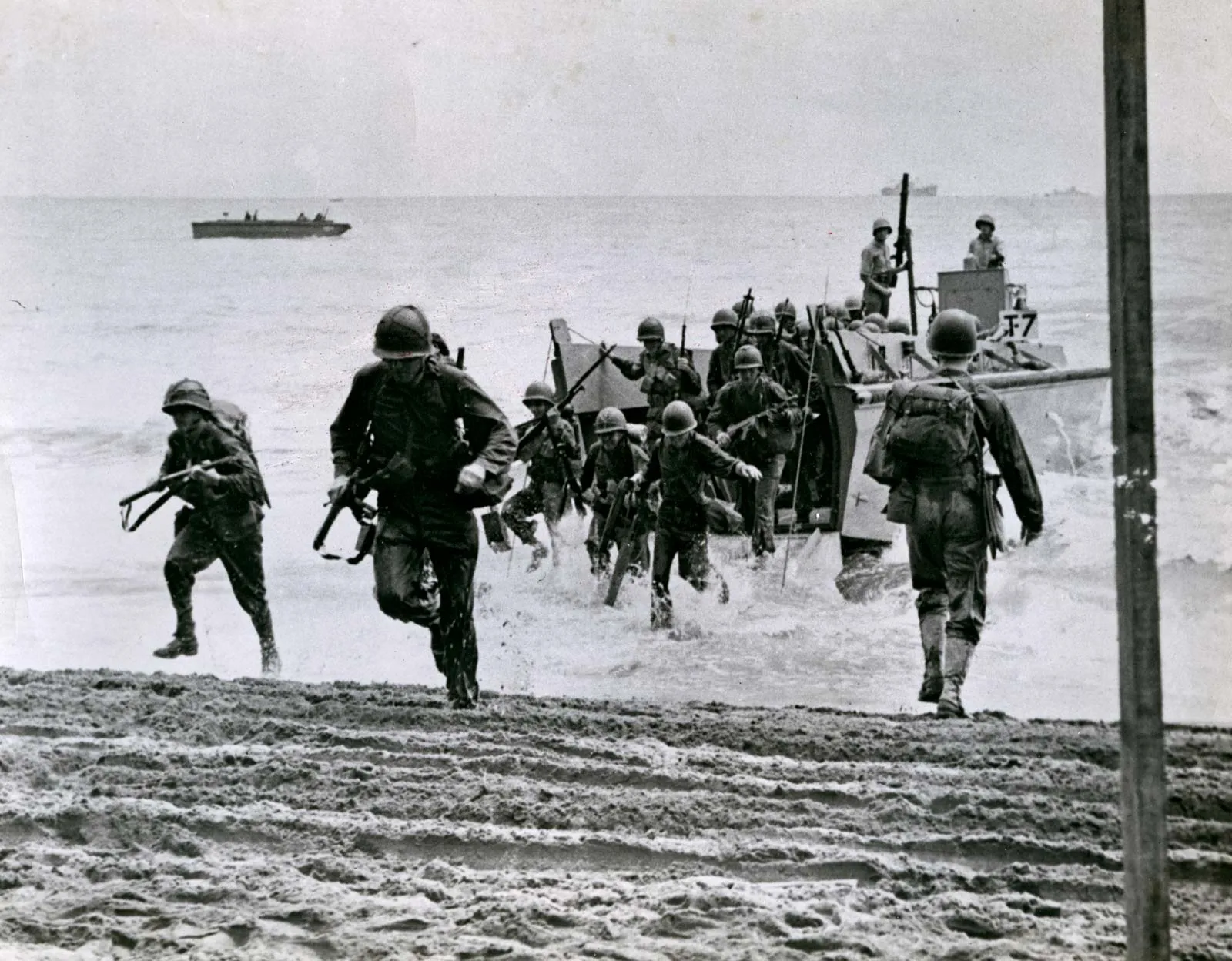
climbing down rope nets into landing craft.
“Here we go.” The words I was waiting to hear came through my earphones. Zeke’s
plane went into a dive on the left of their formation. I stayed right on his wing,
fingers gripping the control stick and my eyes focused on the enemy planes below.
I pulled the trigger. My fifty-caliber machine guns spat bullets into a Betty as Zeke raked the lead one from wingtip to wingtip.
The Japanese air attack was repelled before it reached the troop ships, and we turned for home. Back on the Saratoga, after we landed and pulled back our cockpits, we were cheered by the deck crew. My shirt was damp with sweat, but my pants were dry. I took up smoking cigarettes that afternoon. With one dangling from my lips, I wrote a letter home.
I can’t tell you where I am or what I’m doing (my mail is censored). But the weather is very hot, and I often think of home.
I’m now part of a squadron. I have a lot to learn, but the skipper is a great guy and a great pilot. He’s helping me out. Skipper graduated from the Naval Academy and has two young children back home.
The food in the Navy is good. The other guys in the squadron are older than me and I get some ribbing about my age, but I’m feeling older every day.
Love, Herbert
The battle for Guadalcanal was fought for weeks, and then months on end, and the Saratoga and her fighter squadron stayed involved. Zeke and I started our days smoking and drinking coffee in the ready room. For each mission we were the first off the flight deck and the first to engage the enemy. On land, the Navy SeaBees were dodging bullets and exploding shells, while building an airstrip, Henderson Field, so that American forces could maintain a larger air presence over the island.
Yet the Japanese wouldn’t give up. Enemy ships brought more troops, mainly at night. On land the Marines resisted counterattack after counterattack. The Saratoga and her Wildcats fought off persistent air attacks. Zeke and I had become a good team and were building a reputation with a growing number of kills. Each time we shot down a Japanese plane, the flight crew painted a little Japanese flag on the plane’s fuselage. Once the number of flags hit five, a pilot was considered an ace.
I earned the respect of my squad mates as the number of Jap flags on my plane began to add up. On each successive day, friendships grew stronger. My squad members became the brothers I never had.
Once Zeke landed, he stood on the deck and watched the rest of the squadron come in. Too frequently one or more of them failed to return from a mission. I watched as my mentor Zeke grew noticeably older with each pilot’s loss.
Increasingly, as the weeks went by and the enemy was pushed back farther into the jungle, we’d go up in the mornings and find no enemy planes. On those days we would fly in
great circles over the ocean, waiting. Sweating and bored, I would count sharks to break the monotony. One day I counted forty-eight of them.
It was another hot, humid mid-October day when five Jap Zeros came out of the sun. Two of them locked onto my tail. The other three targeted Zeke. I jerked the control stick to evade the enemy’s bullets. But one of the Jap pilots was good. I could hear the clang and tear of bullets penetrating my Wildcat’s armor. I was going down. As the waves grew closer, I brought my plane’s wings horizontal with the water and pulled back on the stick. The plane hit and bounced, then pancaked to a stop and began to settle into the sea. I opened the cockpit and took a deep breath. The seat was set high in the cockpit, but water was pouring in. I unplugged the radio and pulled off my canvas helmet. After wiggling out of the seat harness and the parachute seat pack, I grabbed the cockpit frame and pulled myself out of the plane just as it went down.
I inflated my life vest and took a minute to look around. The blue sky was empty. There was no sign of Zeke.
For hours I swam towards one of the small islands across from the northern shore of Guadalcanal. The whole time I worried not only about Zeke and the Japs but also about sharks.
Nearing the shore, waterlogged and drained of energy, I struggled through the surf on my hands and knees. The beach grew closer. I pushed myself up to stand. A wave knocked me back down. Crawling forward, I made it to the beach and onto dry land, where I collapsed and rolled onto my back.
The sun had begun to set. My eyes closed and I fell asleep to the soothing sound of the waves.
Voices woke me as the sun rose. Four men armed with machetes and spears stood looking down on me. Fortunately, the islanders were friendly. We all climbed into their outrigger canoe, and they took me to their village. I eventually made it back to the Saratoga.
But Zeke didn’t.
The battles went on, and I continued to spend the predawn hours smoking and sipping coffee in the ready room. I was now one of the more experienced fighter pilots on the ship, and part of my job was mentoring a new wingman, a Yale grad four years my senior.
I missed Zeke. And I missed the other squad members who hadn’t returned.
In early November 1942 the Japs made a major push to retake Guadalcanal. A large naval force and scores of Japanese planes accompanied a fleet of transports carrying thousands of reinforcements. There was no rest for the men of the Wildcat squadron that day. We flew three missions protecting Navy torpedo bombers and dive bombers while they attacked the enemy’s flotilla.
By the last of those missions, I had scored three more kills. But I couldn’t save my wingman when a Zero took position on the Yalie’s tail.
I watched, hoping to see a parachute emerge as his plane spun down into the ocean. It didn’t come.
My adrenaline rush crashed and I turned my Wildcat back toward the Saratoga.
“Wildcat 2 is low on fuel and returning,” I called to the ship over the radio.
There was a long pause before the ship responded. “Wildcat 2, this is the Saratoga. We’ve been hit by a torpedo. Do not, I say again, do not return.” The carrier radioed that I should change course and fly to Henderson Field. It would become my home base as the Saratoga limped off to be repaired.
I landed my Wildcat on the mud runway at Henderson Field and was directed to a parking area at the far end, under a palm tree. As I pulled my canvas helmet off, the reality of the Canal, as the Marines called it, hit. The heat and humidity was overwhelming, and mosquitoes swarmed around my head. I would soon learn that life on the Canal was very different from life on the Saratoga.
“Welcome to hell, Ensign,” the Marine ground crewman said as I climbed down from the cockpit. The Marine’s uniform was filthy. He was too thin and his shoulders were rounded.
As I approached to shake his hand, the mud below my feet sucked my once shining boots down at least an inch with every step.
The Marine saw the number of flags painted on my Wildcat and instantly straightened, stood at attention and saluted.
“Sir. You’re the third Saratoga plane we’ve had come in this afternoon. The other two were Avengers, and the pilots and crew members have been assigned a tent over that way, in the grove of rubber trees. Why don’t you join them. I’ll get an aircrew to refuel and ready your plane.”
With nothing but the clothes I was wearing I made my way through the mud to the rubber tree grove, where lines of tents were hung between the trees.
“Anyone here from the Saratoga?” I yelled out.
A familiar head popped up a little down the line.
“Well, if it ain’t the only surviving Saratoga ace. Good to see ya Herb. You joining Mike and me in these luxury accommodations?” he shouted.
“If you torpedo bomber pilots are willing to have me,” I shouted back.
Mike waved me on. “Come on down. You’re here just in time.”
Mike and Tom flew Avenger torpedo bombers. When I reached the tent, I could see that their clothes were as dirty as the Marine’s I’d just met. Each man held a short-handled shovel, the kind they give to Marines to dig foxholes. Their muddy hands were swiping at mosquitoes.
“We’re digging a slit trench,” Tom explained. He was standing in a small indentation beside the tent. “We could sure use your help.”
Mike added, “The Marine pilots say that the shelling here at night can be frightful. Mark Carl, who lives two tents down, said that last night a large-caliber shell exploded over the tent area. The shells were cutting trees off right over our heads, and shrapnel was falling like hailstones. Hence, the trench.”
I laughed. “Got another shovel?”
Mike handed me a spare shovel and I began digging. When we’d dug the trench—it was about two feet wide and four feet deep—the downpour began. We stepped away from our work, stood tall and raised our arms. The heat, humidity, dirt and mosquitoes were quickly washed off by the torrential rain, but just as fast as it started, it stopped. We were drenched, and the trench was now filled with muddy water.
Things didn’t improve. The rain and mud were a constant on Guadalcanal, as were the hellish heat, humidity and clouds of malaria-carrying mosquitoes.
Yet I kept to my schedule. Every morning I rose before dawn and walked the quarter mile back to the airfield and into a thatched-roof hut that served as headquarters for the pilots. A Marine lieutenant colonel gave out the assignments, but he wasn’t a pilot. He certainly wasn’t Zeke.
At first, I had to beg for cigarettes from the Marine pilots. It took me a week to get a carton of my own. I drank the weak, tepid coffee that was available from an old tin cup I had scrounged up from the Marines’ stores.
We flew daily. It seemed that every time we went up there were dogfights.
The Marine Wildcat pilots were good. Seven of them had each downed at least five Jap planes and were considered aces. The Marines soon learned that I was also good. I’d downed eight myself.
Mark Carl, the Marine who lived two tents down, was the senior pilot. He came from Sioux Falls, South Dakota. He was twenty-seven but looked much older. Mark asked me to fly as his wingman.
Every night under the cover of dark the Japanese Navy would target Henderson Field. Japanese destroyers and cruisers would send shell after shell, and men would scramble for dugouts and shelters. It was not unusual for us Naval aviators to sleep until morning in the water-filled slit trench, like strange human-shaped reptiles.
On one such morning I woke up shaking with chills. It wasn’t quite dawn, but I tried to climb out of the trench to get warm. As I stood, my head began to ache. My movements awakened my tentmates.
Mike asked if I was alright.
“I’ve got the chills and a headache,” I replied. “Go back to sleep.” But my awkward efforts to get out of the trench caused dirt to fall back on Mike and Tom.
Mike stood and reached out to help. He grasped my arm to assist me. His touch was cold. I’m sure he could feel the heat of my skin.
“Hey Herb, you’ve got quite a fever. Let us get you up and over to the medical tent,” Mike said, kicking Tom softly.
“Thanks,” I answered, barely a whisper. “I think I need to get to the latrine soon.”
The medical tent was already alive with Navy corpsmen serving as medics and treating
patients. Mike and Tom pulled rank to get me some attention.
It didn’t take the corpsman long. “You’ve got malaria, just like most of the others in here. We’ll start you on an anti-malaria drug called Atabrine. When taken regularly it’s proven to be somewhat effective.” With that he left to get the pills.
“Here you go, sir,” the corpsman said as he handed me a packet of pills. “If you take them regularly, twice a day, you should be back flying in about two weeks.”
My hands shaking, I immediately ripped open the packet. The pills scattered. Everyone scrambled to pick them up before they sank into the mud. The corpsman handed me one of the dirty pills.
“Here, swallow this,” he directed. “Casualties due to malaria outnumber combat losses ten to one. “
I swallowed the pill, and the corpsman turned to his next patient.
Mike and Tom lifted me up, and with one of my arms around each of their shoulders, carried and dragged me back to the tent in the rubber grove.
I was down and out for three days. My skin turned yellow and the fever rose to 104. My head pounded. I only left the tent when nausea and diarrhea forced me to.
On the fourth day the fever broke. I pulled myself up and out of the tent, and the mosquito swarm attacked immediately. I reached to pull up my uniform collar to protect my neck. Grabbing and tugging my collar loosened the vomit that crusted my shirt. The dried vomit crumbled and fell to the muddy ground.
“Shit,” I said. I realized what a mess I was. Rather than continue my intended route to the medical tent, I turned and shuffled toward the beach and into the surf. The first good wave knocked me off my feet, and I fell butt first into the water. I sat still, letting the cleansing waves wash over me. But the taste of salt water brought back the day Zeke went down.
That afternoon I wrote another letter home.
My mail is still censored, so I can’t tell you where I am or what I’m doing, but the heat and humidity are overwhelming. I’m staying in a tent, which I share with two other pilots. Makes me long for home, clean clothes and New England weather.
I’ve been sick the last few days, but don’t worry. I’m taking a medicine which is helping a lot and I’ll be good as new by the time you get this letter.
Love, Herbert
That night I joined Mike and Tom in the slit trench. The bombardment from the Japanese ships was heavier and lasted longer than usual. As dawn arrived we rose to check out the tent. Shrapnel had riddled it with holes and rips.
“We’d better go down and check on the planes,” Mike said to Tom. The two men turned and headed off. I waited a moment, thinking, knowing that the torpedo bombers would be sent out to attack the Jap ships that had destroyed our tent. Torpedo bombers were no match for Zeros. I was feeling a little better, and someone needed to fly cover for the Avengers.
When I reached the thatched air headquarters, Mike and Tom and their crewmen were already climbing into the Avengers. There, under the palm tree, stood my Wildcat. I grabbed the skinny member of the ground crew who had greeted me when I first flew onto the Canal.
“Is Wildcat 2 fueled and ready to go?”
“Yes, sir. We’ve been keeping it ready, hoping you’d return.” He didn’t comment on the yellow tinge of my face.
The Avengers had taxied out to the runway by the time I pulled myself up and into the plane, tightened the straps and pulled my helmet on. It was taking too long. Mike and Tom’s Avengers were already in the air. My breathing was forced. I gagged, but there was nothing in my stomach to come up. I knew I had to follow the Avengers into the air.
Luckily, the Wildcat started right up. Muscle memory took control as I taxied onto the muddy runway. Lowering to half flaps for more lift, I ran the engine up to full throttle while standing on the brakes. I released the brakes and wrestled the plane down the strip. Somehow it staggered off the end of the runway and into the air.
Once I was off the ground I called them on the radio. “Avenger 1 and 2, this is Wildcat 2, I’m on your tail and will provide cover.”
There was a significant pause, and then the words came through my earphones, “Thank you, Wildcat 2, you crazy son of a bitch.”
It wasn’t long before the Japanese destroyers came into sight.
“Wildcat 2, we’re going to circle and come in with the sun behind us. Keep an eye out for
Zeros.”
Once they were lined up, the Avengers descended, flying low and straight into heavy gunfire from the destroyers. Then they let go of their torpedoes and climbed, turning back toward the Canal.
From high above I watched as the torpedoes struck, one after another, huge pillars of flame and spray bursting up against the sides of the destroyers. I turned the Wildcat and, climbing five thousand feet higher, followed my tentmates.
“Well done, Avenger 1 and 2. Two sinking bad guys,” I radioed to Mike and Tom.
My head on a swivel, I continued to watch for Zeros. It wasn’t long before they arrived, four of them coming fast out of the north.
My stomach muscles tightened, but there was still no vomit.
“Avenger 1 and 2, here they come. Four bandits from the north at about ten thousand feet.”
The speedy enemy planes quickly caught up with the torpedo bombers. With bullets spitting out of their machine guns the Zeros drew closer to the tails of the American planes. Slightly above and to the east of the melee I dove the Wildcat directly down on the lead Zero and held the target in my sights. I watched tracers blast into the enemy. Then I turned hard right and came around to line up on the second Zero. He veered off his target Avenger, and we were heading right at each other.
I gripped the trigger and watched as the bullets slammed into the Zero’s cockpit. I didn’t see the Jap pilot’s face, but his plane burst into flames.
I pulled back on the stick to get above the now blazing Zero. Out of the corner of my eye I saw a third Zero. It was headed right at Tom’s Avenger. Tom veered hard left, but he couldn’t escape the rounds battering his plane.
I pushed the nose of my Wildcat down and hard to the left. I was behind his back quarter when once again I gripped the trigger and bullets punched holes the whole length of the Zero’s fuselage. It burst into flames and went down in the sea.
Anger and adrenaline raged in me. I climbed higher once again and sought out the last Zero. This one was also after Tom’s Avenger. Tom jerked his plane left and right, trying to avoid the stream of bullets coming from the Zero.
When the Jap pilot saw my Wildcat coming his way, he broke off his attack on the Avenger and turned north. I wasn’t about to let him escape. At full throttle I dove at the Zero, machine guns blasting. The bullets severed the Zero’s wing and it began spinning down.
I turned and looked for Tom.
“Avenger 1, this is Wildcat 2, do you read?”
Tom’s plane was now in sight, and I flew toward it.
“Roger, Wildcat 2. I’ve been hit. I’m injured and losing fuel rapidly. I’ll try to make it back to base.”
I pulled my Wildcat up to the Avenger. Through the cockpit glass I could see my tentmate. Tom was hunched over the controls of his plane, obviously in pain and struggling to keep it flying.
“I’m right on your wing, Avenger 1. I’ll shepherd you in.”
I could see fuel draining from a hole in the Avenger’s fuselage. The Canal was just ahead.
“Henderson Field, this is Wildcat 2. I’m a few minutes out with Avenger 1. Avenger 1 is low on fuel and badly injured. Have a medic available at the runway.”
I slowed the speed of my Wildcat and slipped behind Tom.
“Avenger 1, I’m right behind you. Pull back on the throttle and cut your air speed. I’ll talk you in.” He was weaving slightly but still aimed at the airfield.
“Landing gear down, Tom.”
The mud runway was directly ahead.
“Just to the right, Tom … that’s it.”
The Avenger hit the runway hard and bounced slightly.
“Cut your engine, Tom!” I shouted into my radio.
But Tom didn’t. The Avenger kept going, until it slammed into the palm trees at the edge of the field and burst into a fireball.
I landed, jumped out of the cockpit, and ran toward the flaming plane.
“Get him out of there!” I yelled at the mechanics.
The ground crew fought their way through the smoke and flames. Tom’s body was smoking when they finally extracted it. The smell of his burning flesh will live with me forever.
* * *
As we approached the brightly lit Capitol Center for the film’s premiere, my father sat stoically in the back seat. We knew he didn’t want to be there. The wrinkles and furrows on his face seemed somehow deeper when I dropped him, my wife and mother at the foyer and went to park the car.
The crowd had grown by the time I entered the theater. I searched the room and soon noted a large group in a corner of the lobby. I made my way toward them, all in tuxedos and evening dresses, pressed shoulder to shoulder. As I edged into the group, it became apparent that they were all gathered around Ken Burns and an elderly gentleman engaged in deep discussion. The elderly gentleman was my father.
I reached him just as the lights dimmed to call people to their seats, and Mr. Burns was pulled away by an assistant.
After the showing I walked my father to the men’s room. Neither of us said a word. The documentary had been vivid, shocking in its portrayal of a generation of young men, many who never came home. And many of those who did return were broken, some physically, others with invisible wounds.
Yet my father’s wrinkles and furrows had receded, become less deep. Had talking to Ken Burns and watching the film about the war helped? Perhaps he wouldn’t hold the scars of his war years inside any longer. Maybe, all these years later, he would sleep through the night and not be awakened by the horror of those flames, the smell of burning flesh, and panic about circling sharks.
We got to the men’s room and stood side by side at the urinals. Behind us men waited, and the line grew longer. I was done, but my father lingered, and I remained standing in place. After a few minutes he turned to me and whispered, “I know why you wanted me to come tonight. Thanks. But remember, I’m an old Naval Aviator with a swollen prostate … and just like this pee, change will not come quickly.”