Carolyn Schlam was born and raised in New York City and now works in the Hudson Valley. She studied painting with Norman Raeben, taught for years at Carnegie Hall Studios, and also trained in glass and wood sculpture. Her portrait Frances at 103 was shown at the Smithsonian’s National Portrait Gallery in 2013 and was then acquired for the Museum’s collection. She is also the author of books on art, including The Joy of Art and The Creative Path, and of a novel, Madeline and Her Husbands.
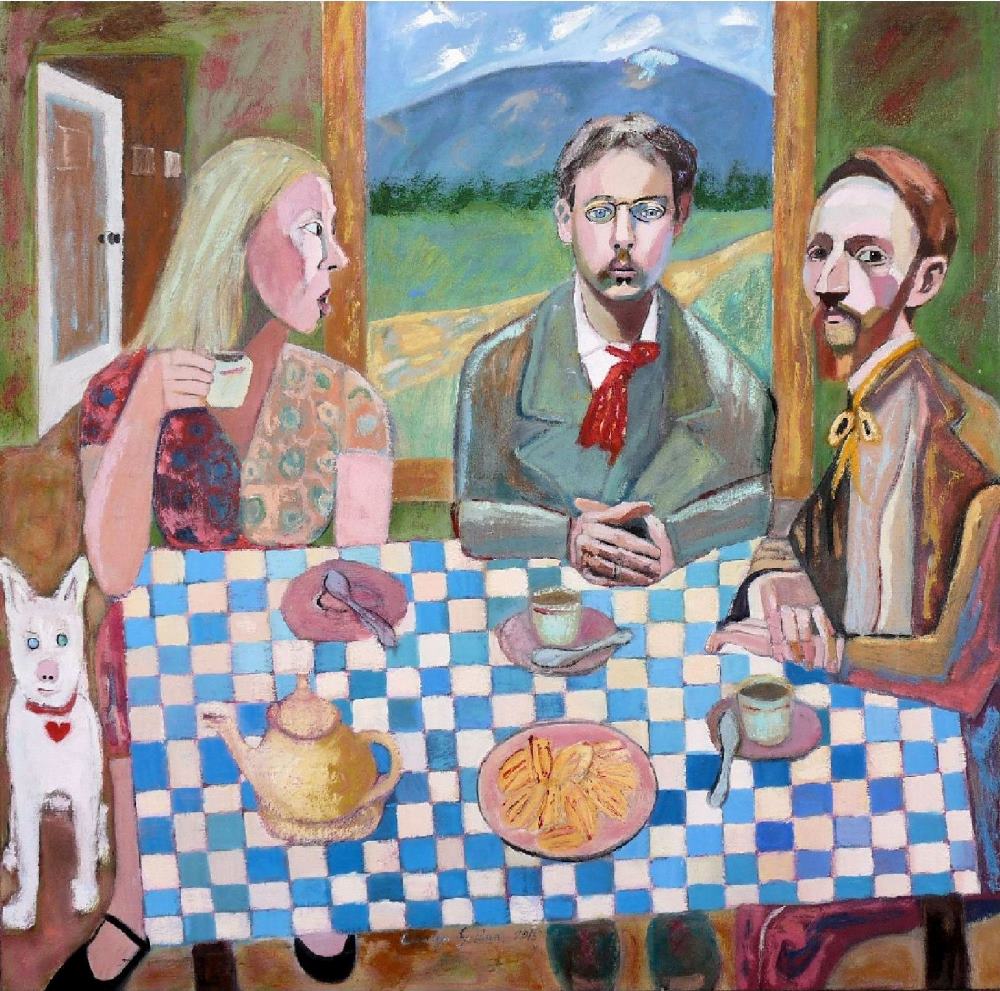
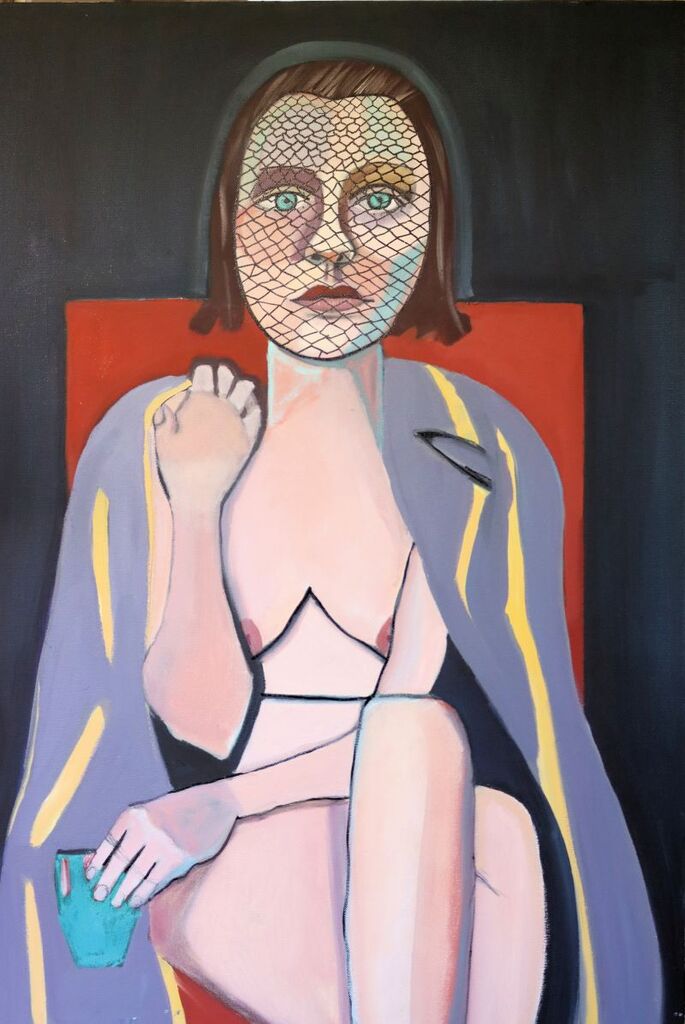
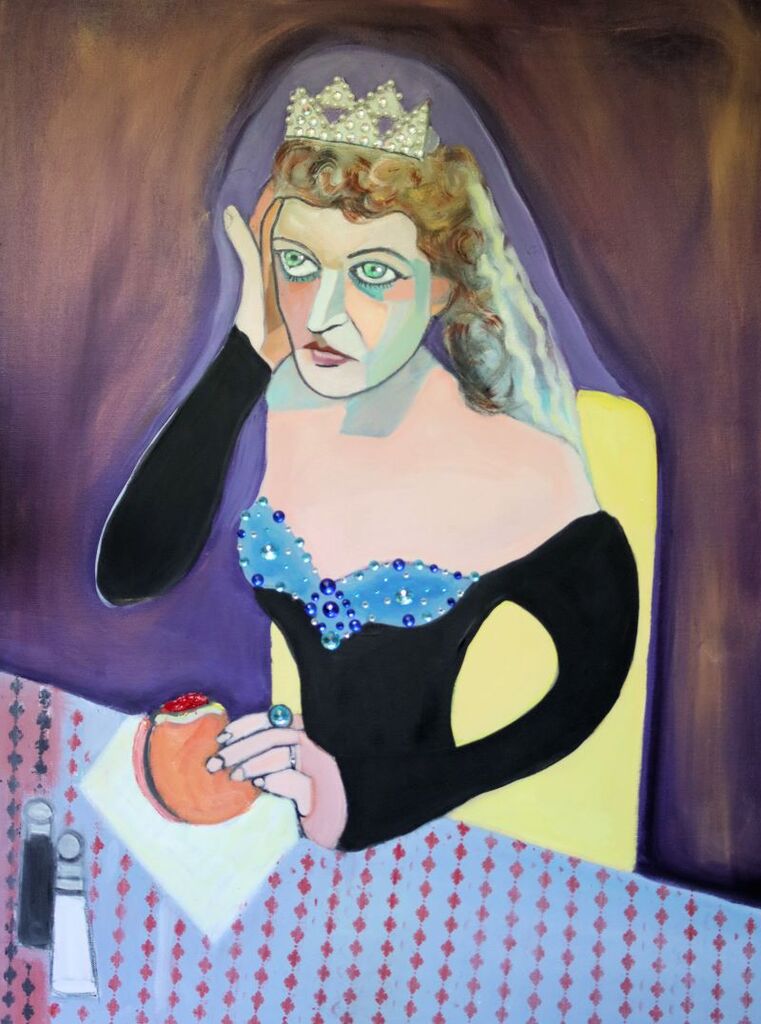
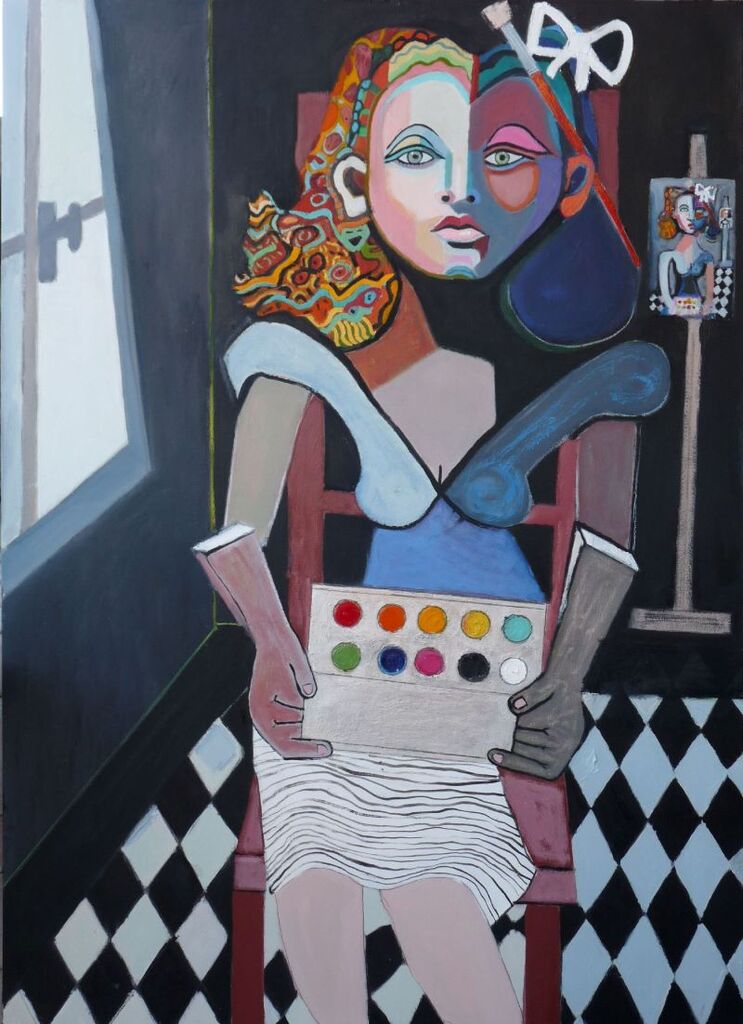
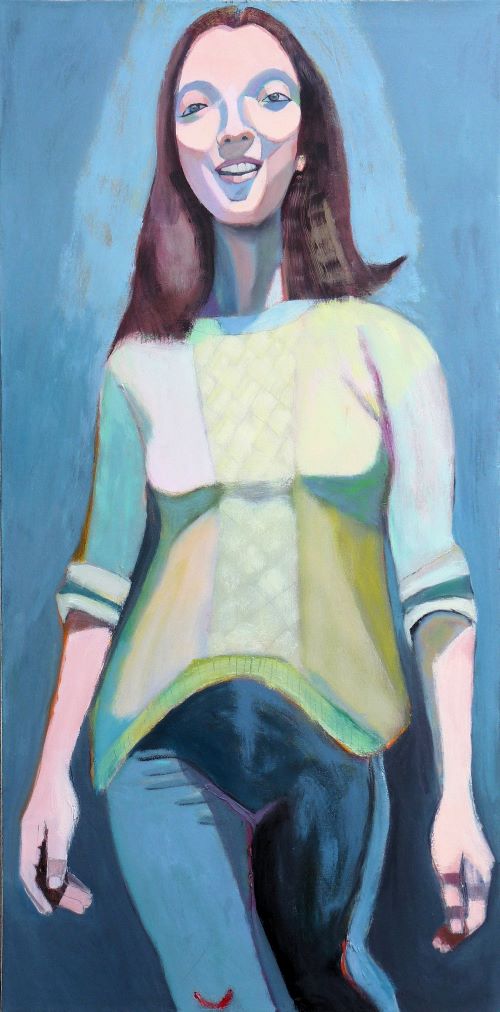
The five paintings in this selection are all figurative and all concentrate on women. They share a method that Schlam’s own site calls figuration in three modes: the traditional likeness, the expressionistic heightening of inner life, and the stylized, iconic image. The selection moves between these modes. This Is What It Feels Like to Have Your Whole Life is the most direct: a tall, slightly overlong standing figure in cool blues, painted loosely, with the face carrying the emotional weight. Nude with Mask and Queen Eats a Hamburger turn the sitter into an emblem. The veil, the crown and the mask are costume, and the sitter’s gaze undercuts it. The Power of Art goes furthest into Picasso-derived fragmentation, with a split face, a palette held like a shield, and a harlequin floor. Coffee: Remembrance is the only group scene, a checked tablecloth and a window onto mountains, closer to Vuillard and Bonnard than to the others.
The strengths are real. The color is confident, the drawing is elegant, and there is a deliberate refusal of solemnity: the pairing of a crown with a hamburger is a joke that also holds an observation. The feminist interest in how women are looked at, dressed up and made to perform is clear, and the best canvases keep a sitter’s private fatigue visible under the costume.
The criticisms are also real. The deliberate quotation of the modernist canon (Picasso especially) sometimes stands in for invention. In The Power of Art the title states the theme the picture only illustrates. The titles in general explain more than the images need them to. The faces in the stylized works become very similar, with the same wide-set pale eyes, which flattens the sitters into a type. And the five pieces differ so much in handling that the selection reads as a sampler of Schlam’s modes and not as one argument. Coffee: Remembrance in particular sits apart.
Still, the pictures reward looking. Schlam paints vulnerability and longing without sentimentality, and the humor keeps the work from becoming mere pathos.
See her work: www.carolynschlam