
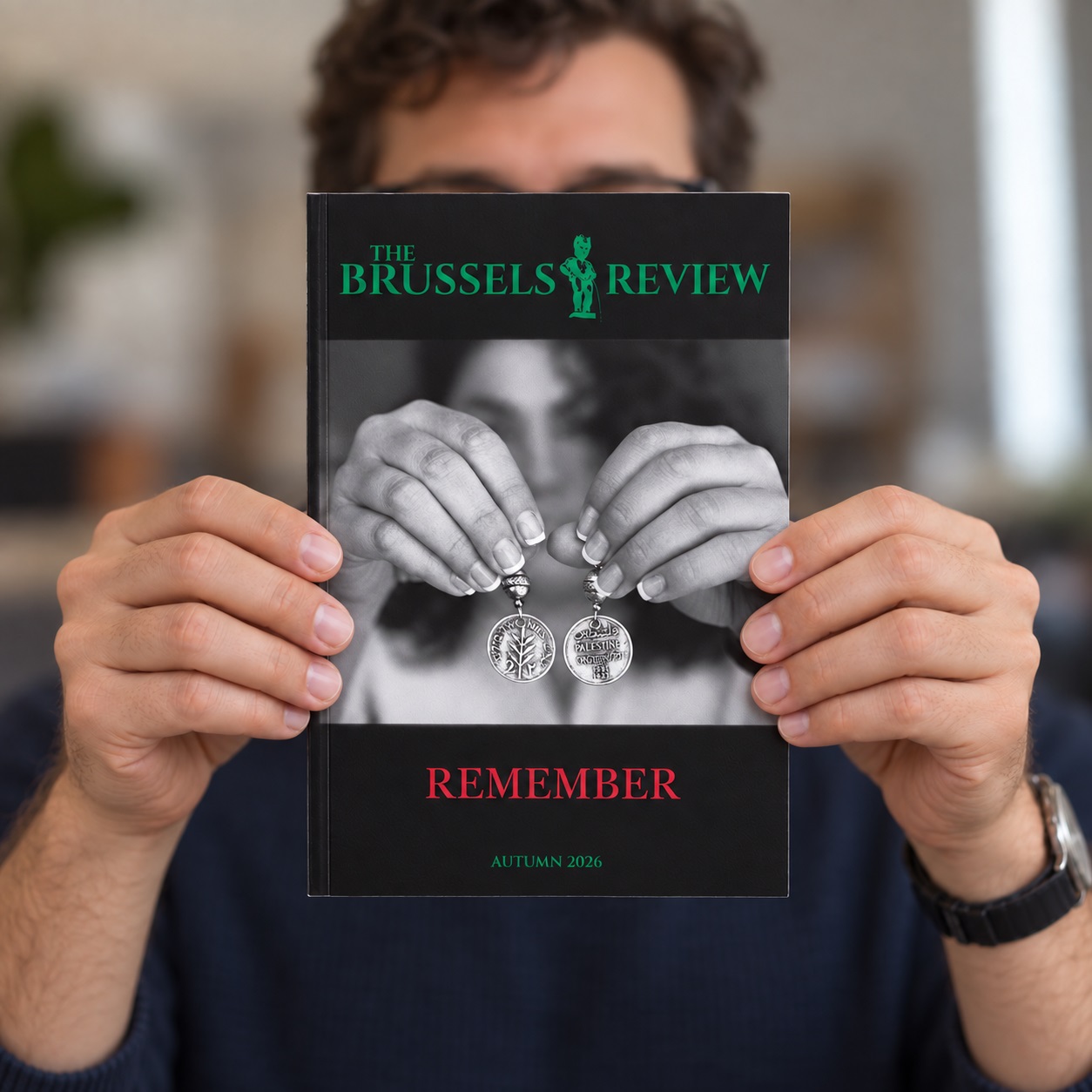
There are twenty-five people in Najib Joe Hakim’s Home Away from Home: Little Palestine by the Bay. Their portraits disturb the flow of this autumn issue.
You just need a phone to scan a QR code and the people will tell you what home means to them. Among so many written voices, there is this rare chance of hearing someone speak through a book.
As I read the issue again, not as an editor this time, I noticed how often the writers of this Autumn approach that same question, even when not using the word home.
A girl in Blackpool dreams of reaching Moscow. A woman keeps her china safe while the life for which she has been saving it is gone. Children roam through a father’s possessions. A mother prepares dinner, under the soundtrack of distant gunfire.
The people of this issue have little in common, apart from labels. Yet I see in them what we all share: knowing what to hold on to your heart, and what to let go.
Home is a special word for me. Now that my mother and father are gone, I can only have memories of my home; because my “now home” is my children’s home, not mine.
Still, we tend to furnish it with warmth, familiarity, a place where someone can wait for us.
Several writers here make this comfort difficult. Their characters know the rules of a household too well. They have learned whose rage and anger to anticipate, what to hide, which version of “me” will be welcomed at the table. Leaving such a place is necessary, but it can take years and tears.
Still, the attachment persists. I’m moved by the ordinary things found in these pages: the Soviet trinkets in Madeleine Foster’s story, the blue china in Jacinta Cogan’s, and the tools in Michael Hardin’s essay.
We ask and pretend a great deal of things; insist on keeping people close, preserving time and deluding ourselves in the insistence that something happened as we remember it. Discovering that you have inherited an obligation, not just an object, is proof of life. Hardin’s account shows the possibility of receiving something from our parents without passing it on entirely unchanged.
Of course, apart from Palestine, there is anger in this issue, too, and I’m really glad for it. Sometimes one needs an angry sentence.
There are writers here who have no patience for the usual structures of power, the demands made of women’s bodies, and for the humiliations that often come disguised as love. The pieces can be funny and abrasive in the same breath, and this strange mix makes room for those feelings we are often encouraged to bite our tongues about.
Don’t get me wrong: solemnity is there, but we have flying pigs here too. There is a prince whose bite makes a business opportunity for his governors. There is music, desire, and the hardheadedness of people who believe they understand themselves. Part of my pleasure in this issue is really the change of company/place from one piece to the next.
But I also carry a discomfort from Genevieve Chornenki’s “Via Dolorosa,” making a poem from a homeless man’s suffering. I know it is an awkward thought to bring this to the introduction of an issue, but I had to mention it.
The point is that we can be moved by what we read and hear, and choose to remain the same. Just a choice.
I have no promise or prediction of what these pages will change in you, but my hope is more personal: that a voice you will hear in your head or through the speakers of your phone will stay with you; will be converted into a question and you will find yourself going back to a sentence or a face, or searching for things to understand beyond propaganda and indoctrination.
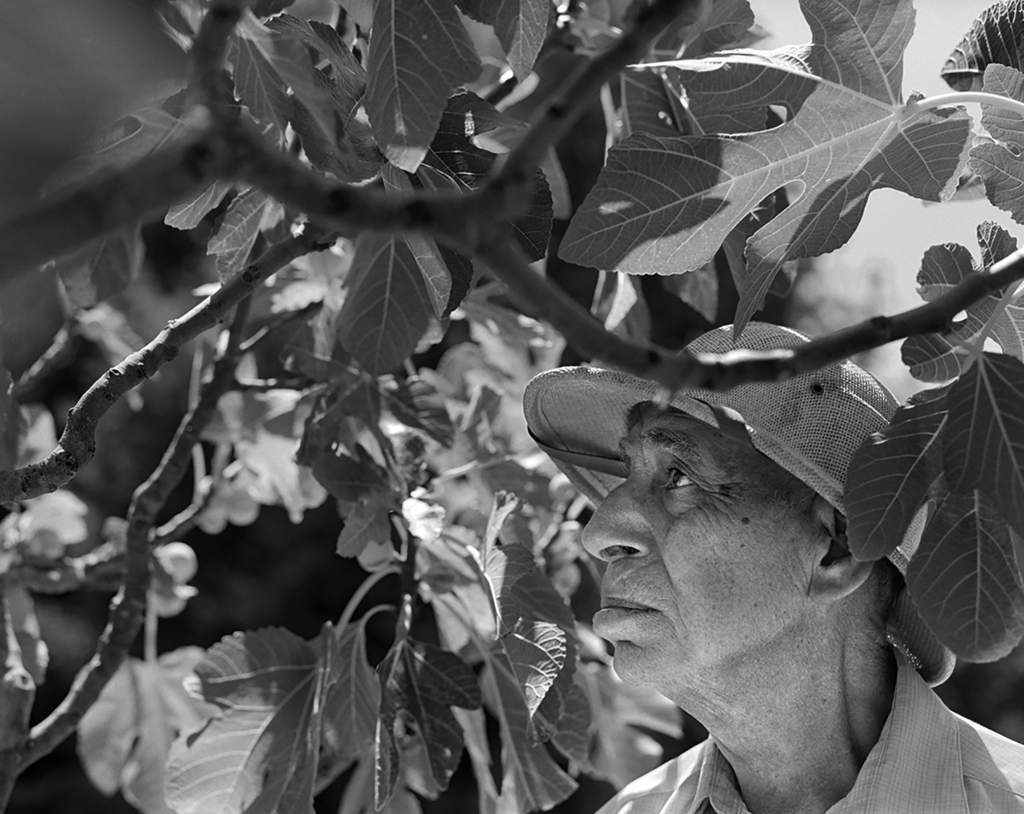
For me, the question is: what is in the sky above the fig leaves? Is the man still beneath the fig tree? I wanna return to that photograph, look up with him, wonder about the life we left behind and ask:
Can we be the people we were before?
Use TBR-10% for 10% off until October 15.
Content:
Featured Artist
Najib Joe Hakim: Home Away from Home: Little Palestine by the Bay
Fiction
Madeleine Foster: 2000 Light Years From Home
Jacinta Cogan: Imperial Blue
Craig Stockwell: Righteousness
Ema Dumitru: Clean like forgetting
Charlie Freelander: Mainland
Soline Lippe de Thoisy: Olfactory intrusion
Monika Andrulyte: Cesarean section
Julia Breitkreutz: Witness
Daryna Riznyk: Bakhmut
Chad Poovey: A Simple Story about Pigs
Tomasz Laczny: The Prince Bites
Patrick Kruth: Till Death Calls You Away
Yvonne Conza: Blue Lady
Robert Dall: The Murray Slaughter Experience
Keith M. Hinrichs: Currency
Juan Parra: Salt and Vinegar
Jake Shore: Immersive Theatre
Joanne Soper-Cook: Herr Meisner’s God
David W. Sprecher: Reunion on Sage Street
Poetry
Thomas Heise
Daniel Rye
Laura Michiels
Cait McCann
Susan Kolon
Genevieve Chornenki
Steve Pollack
Sajidah Mustafa AlSaihati
Nonfiction
Chris Arthur: You’re not really going to call it ‘The Art of the Essayist,’ are you?
Michael Hardin: Tools
Baharan Eghbalzadeh: A note to self: on love and other apps


